






Buy Turken “Naked Neck” Chicken Online
Buy turken “naked neck” chicken online from cackle hatchery. Compare the bird or breed details, available options, current availability and delivery conditions before ordering.
Turken “Naked Neck” Chicken
Breed Facts
- Poultry Show Class: All Other Standard Breeds, Miscellaneous Class
- Weights: Hen ——-6 1/2 lbs
Rooster—-8 1/2 lb
Pullet——-5 1/2 lbs
Cockerel—7 1/2 lbs - Purpose and Type: Primary production, Egg Laying & Pet/Secondary meat source
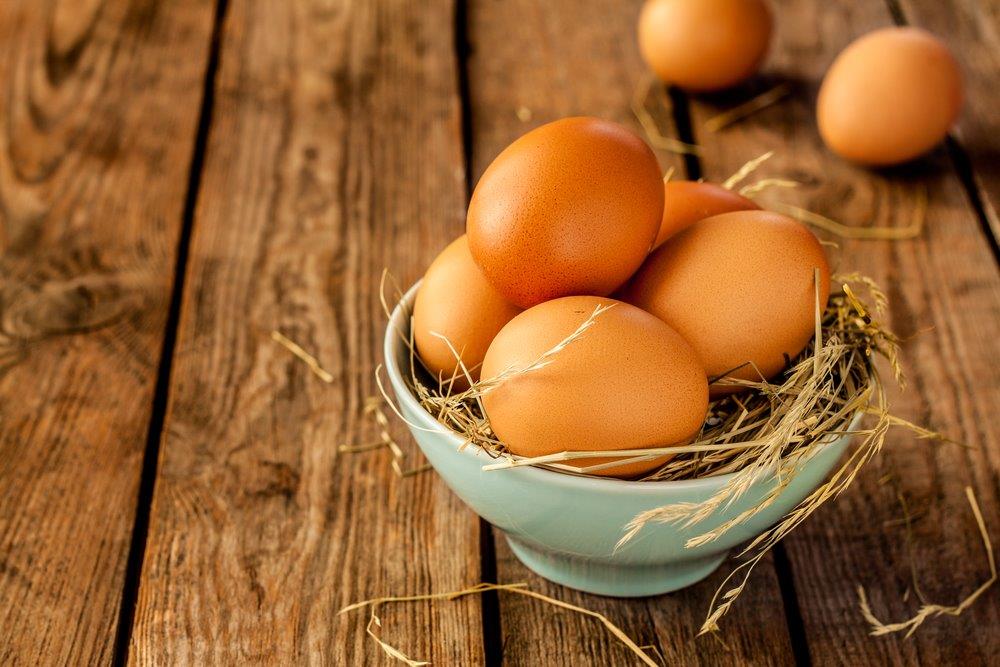
- Egg Shell Color: Light Brown
- Egg Production: 180-240 eggs per year. (estimates only, see FAQ)
- Egg Size: Medium-Large
- Temperament: Docile
- Gender Accuracy: 80-85%
- Fertility Percentage: 55-70%
- Broody: Setter
- Mating Ratio: 10 Females to 1 Male
- Roost Height: 2 to 4 feet
- Country of Origin: Eastern Hungary
- APA: Red, white, and buff recognized by American Poultry Association in 1965
- TLC: Not Listed
- Breeder Farm Source: Cackle Hatchery® Poultry Breeding Farm has been developing our bloodline/strain of production type Turken “Naked Neck” since 1971.
Turken (Naked Neck) Chicken
Breed Overview and Origin
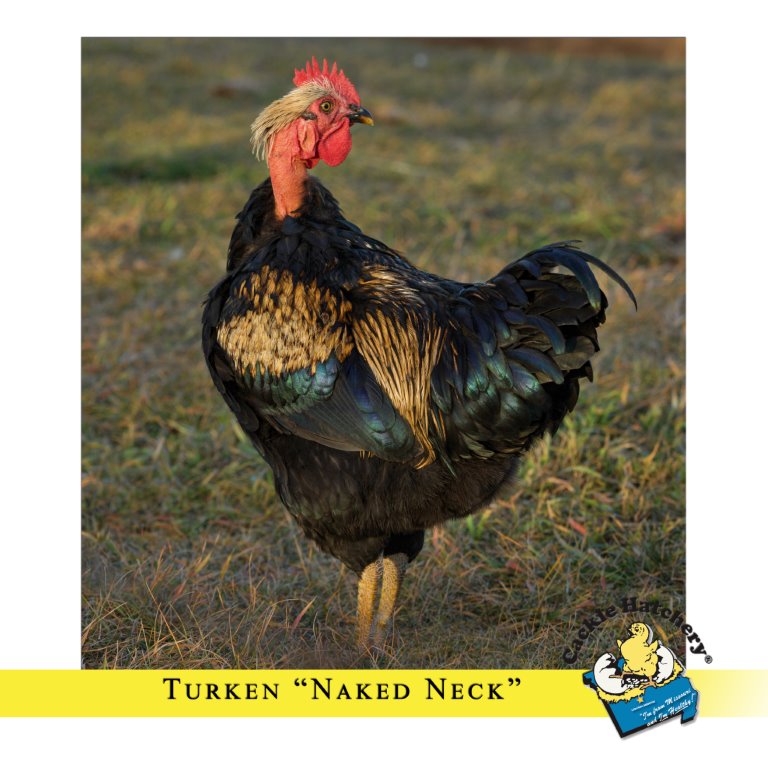
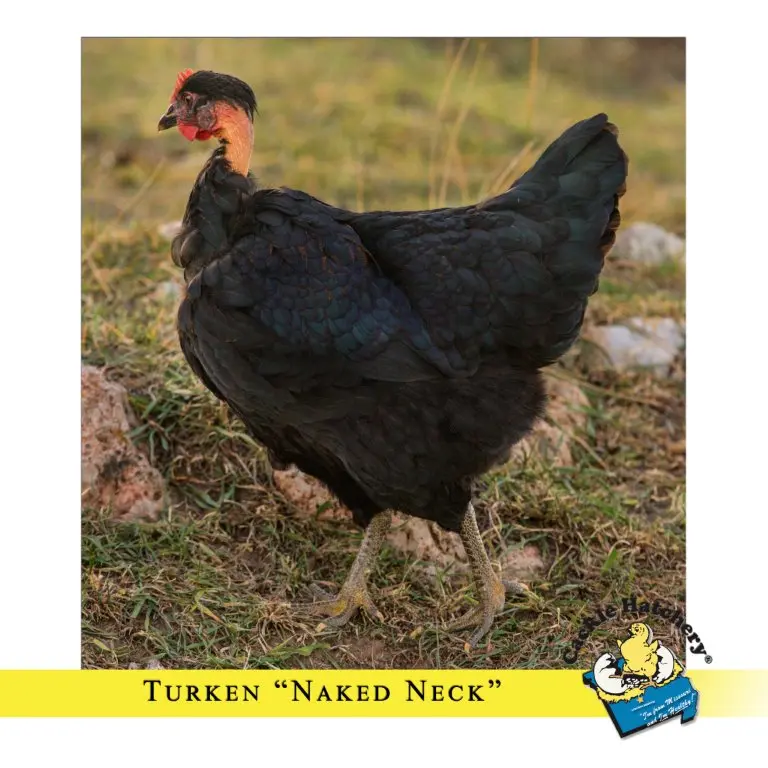
The Turken “Naked Neck” chicken is one of the most unusual-looking birds you can add to a flock. At first glance, people often think it must be part turkey, but it is 100% chicken. The bare neck comes from a natural chicken trait, not a turkey cross.
Originally called the Naked Neck, this breed traces back to Eastern Europe, with many accounts pointing to Eastern Hungary and Transylvania. The bare-neck trait became useful because fewer neck feathers made the birds easier to pluck for meat and helped them handle hot weather better. Older conservation sources note that Naked Neck chickens have documented history going back to at least 1810 and may be much older.
If you want a chicken that is gentle, useful, heat tolerant, and sure to start conversations, Turkens are hard to beat. They lay brown eggs, carry good body size, and work well for both backyard eggs and meat.
Appearance and Characteristics
Turkens have a bare, turkey-like neck, which gives them their famous nickname. They come in different colors, and color can vary from bird to bird. This makes them a fun choice if you like a flock with variety.
The naked neck is not just for looks. The reduced feathering can help birds tolerate heat and makes processing easier if you raise chickens for meat. Even so, they still need normal chicken care: shade, clean water, dry housing, predator protection, and good feed.
When breeding Turkens, not every chick hatches with a naked neck. About 90% may show the bare-neck trait, while about 10% may hatch with feathered necks. For chick orders, only naked-neck chicks should ship to you, but if you breed them later, you may still see some feather-necked offspring.
Turken vs Turkey: Are They Related?
Despite the nickname, Turkens are not turkey hybrids. They are chickens.
The confusion makes sense because the bare neck gives them a turkey-like appearance. However, the trait comes from chicken genetics. If you want a bird that looks different but still behaves like a chicken, lays chicken eggs, and fits a normal chicken flock, this breed checks those boxes.
That unusual look is part of the charm. Some people need a minute to warm up to them, but many keepers end up loving Turkens for their hardiness, personality, and practical value.
Egg Production and Utility
Turkens are dual-purpose chickens. They lay brown eggs and also carry enough size for meat use. Their reduced feathering can make processing easier, which is one reason people historically valued the naked-neck trait.
They are also known for good laying ability, especially for a dual-purpose bird. Cackle lists Turkens as ornamental dual-purpose brown egg layers that are useful for meat. Actual egg production can vary with age, daylight, feed, weather, housing, and overall care.
If you enjoy hatching projects, Turken Naked Neck Fertile Hatching Eggs may be available at limited times of the year. Cackle notes that hatching eggs generally do not ship during the hottest part of summer because heat can raise the risk of poor hatchability.
Temperament and Suitability
Turkens are gentle, hardy, and easy to keep. They handle confinement well, which makes them useful for backyard coops and runs. They can also enjoy free range when you provide a safe area.
Their heat tolerance is one of their biggest strengths. If you live in a warmer climate, the reduced feathering can help them stay more comfortable than many heavily feathered breeds. Still, every flock needs shade and cool water in summer.
They can also adapt to many climates. The bare neck may look delicate, but these are tough chickens. In cold weather, give them a dry, draft-protected coop with good ventilation, just as you would for any other breed.
Is the Turken “Naked Neck” Chicken Right for Your Flock?
Choose Turkens if you want:
A unique chicken with a bare neck
A heat-tolerant backyard bird
A dual-purpose chicken for eggs and meat
A brown egg layer
A gentle bird that handles confinement well
A chicken that comes in mixed colors
A practical meat bird that is easier to pluck
A conversation starter for your flock
A fertile hatching egg option when available
Overall, this is a good choice if you want something different but still practical. Turkens may look odd at first, but they are useful, gentle, and well suited for many backyard flocks.
If you are still comparing breeds, the Chicken Breed Selector and Chicken Breeds List Comparison Chart can help you sort birds by purpose, egg color, temperament, and flock needs.
Breed History and Preservation
Naked Neck chickens have a long history in Eastern Europe. Breeders valued the bare-neck trait because it reduced feathering, improved heat tolerance, and made the birds easier to process for meat.
The nickname “Turken” came from the mistaken belief that these birds were part turkey. In reality, they are chickens with a distinctive genetic trait. Over time, the unusual look became part of their appeal.
Several Naked Neck color varieties entered the American Standard of Perfection in 1965. Cackle does not offer a specific color variety; instead, you should expect color variety in the chicks and adult birds.
Recognition and Availability
A number of Naked Neck color varieties were admitted to the American Standard of Perfection in 1965. However, color availability can vary, and this offering does not focus on one specific color variety.
You can choose Turken Naked Neck chicks when they are in season. If you prefer hatching your own, Turken Naked Neck Fertile Hatching Eggs may be available seasonally. Before you plan your order, check the Availability Chart for current hatch and shipping options.
Related Breeds and Helpful Cackle Hatchery® Resources
If you like Turkens, you may also want to browse brown egg laying chickens, hot weather chickens, dual-purpose chickens, and baby chicks for sale.
For hatching projects, browse hatching eggs for sale. For general flock planning, use the Chicken Breed Selector or the Chicken Breeds List Comparison Chart.
FAQ: Turken “Naked Neck” Chicken
What is a Turken chicken?
A Turken, also called a Naked Neck chicken, is a chicken with a naturally bare neck. Despite the turkey-like look, it is not part turkey.
Are Turkens part turkey?
No. Turkens are chickens. The bare neck comes from a chicken trait, not a turkey cross.
Where did Naked Neck chickens originate?
Naked Neck chickens trace back to Eastern Europe, with many accounts pointing to Eastern Hungary and Transylvania. Older conservation sources document them as early as 1810.
Why do Turkens have naked necks?
The bare-neck trait reduces feathering. Historically, people valued that trait because it made the birds easier to pluck for meat and helped them tolerate heat better.
Are Turkens good egg layers?
Yes. Turkens are known for good laying ability, especially for a dual-purpose bird. Actual production can vary with age, daylight, feed, housing, weather, and care.
What color eggs do Turkens lay?
They lay brown eggs.
Are Turkens good for meat?
Yes. Turkens are dual-purpose chickens with good body size. Their reduced feathering can also make them easier to pluck when processing.
Are Turkens heat tolerant?
Yes. Heat tolerance is one of their strengths. Their reduced feathering helps them handle warm weather, though they still need shade, cool water, and good airflow.
Are Turkens cold hardy?
They can adapt to many climates. In winter, give them a dry, draft-protected coop with good ventilation.
Are Turkens friendly?
Yes. They are generally gentle and easy to handle. Many keepers find them calm and manageable in backyard flocks.
Do Turkens handle confinement well?
Yes. Turkens handle confinement well, making them useful for backyard coops and runs. They can also enjoy free range when you provide a safe area.
What colors do Turkens come in?
They come in different colors. This offering does not focus on one specific color variety, so adult plumage may vary.
Will all Turken chicks have naked necks?
Not always when you breed them at home. About 90% may hatch with naked necks, while about 10% may hatch with feathered necks. Chick orders should include naked-neck chicks, but future offspring may still include some feather-necked birds.
Are Turkens recognized by the APA?
Several Naked Neck color varieties were admitted to the American Standard of Perfection in 1965.
Can I order Turken Naked Neck hatching eggs?
Yes. Turken Naked Neck Fertile Hatching Eggs may be available at limited times of the year.
Where can I check chick availability?
Check the Availability Chart for current hatch and shipping options.
Ordering Information
Check the current price, stock status and selectable options displayed on this page. Read the product information and applicable policies before adding this item to your cart.
Related Products
Related products