

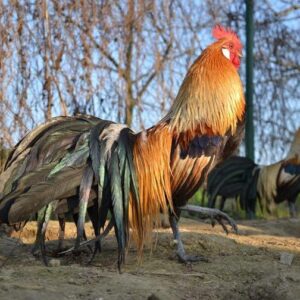
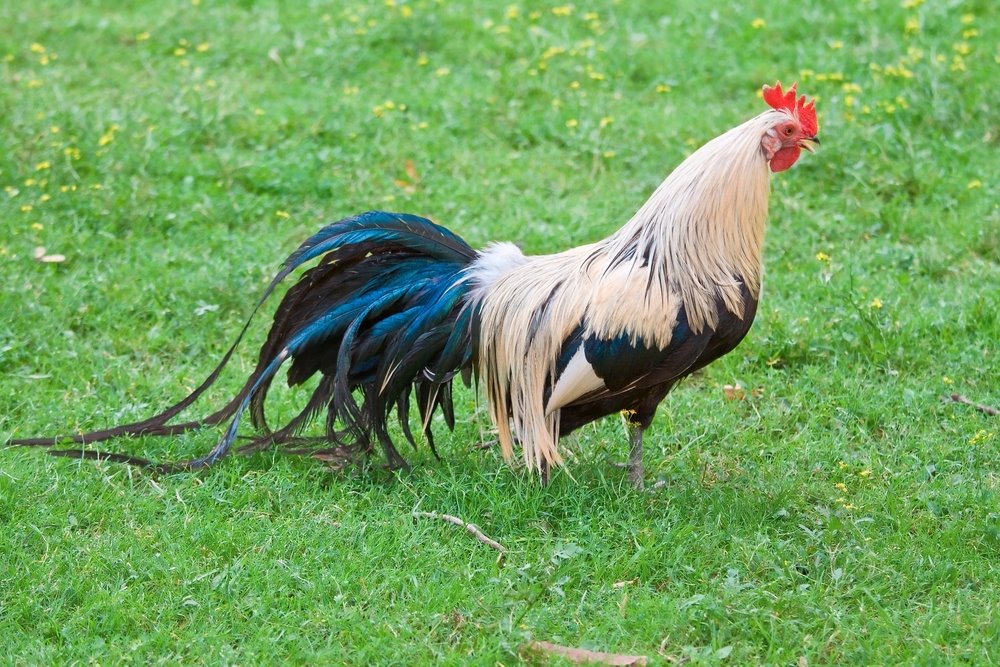

Golden Duckwing Phoenix Standard Chicken
Breed Facts
- Poultry Show Class: All Other Standard Breeds, Orientals Class
- Weights:
- Hen—–4 lbs Rooster——5 1/2 lbs
- Pullet—3 1/2 lbs Cockerel—–4 1/2 lbs
- Purpose and Type: Egg Laying, Long Tail Feathers; Exhibition
- Egg Shell Color: Cream or Tinted
- Egg Production: Poor
- Egg Size: Small
- Temperament: Active
- Fertility Percentage: 40-55%
- Broody: Setters
- Mating Ratio: 9 Females to 1 Male
- Roost Height: 6+ feet
- Country of Origin: Japan
- APA: Yes, Recognized by American Standard of Perfection in 1983
- TLC: Yes, Watch Status
- Breeder Farm Source: Cackle Hatchery® Poultry Breeding Farm has been developing our bloodline or strain of pure Golden Duckwing Phoenix since 2005.
Golden Duckwing Phoenix Chicken
Breed Overview and Origin
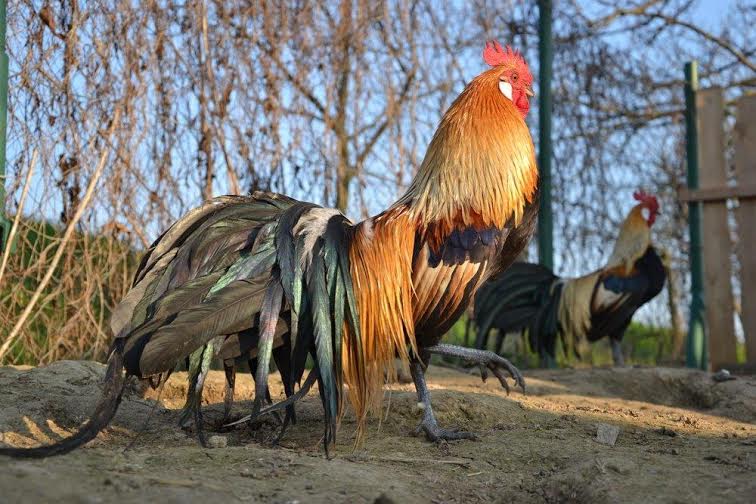
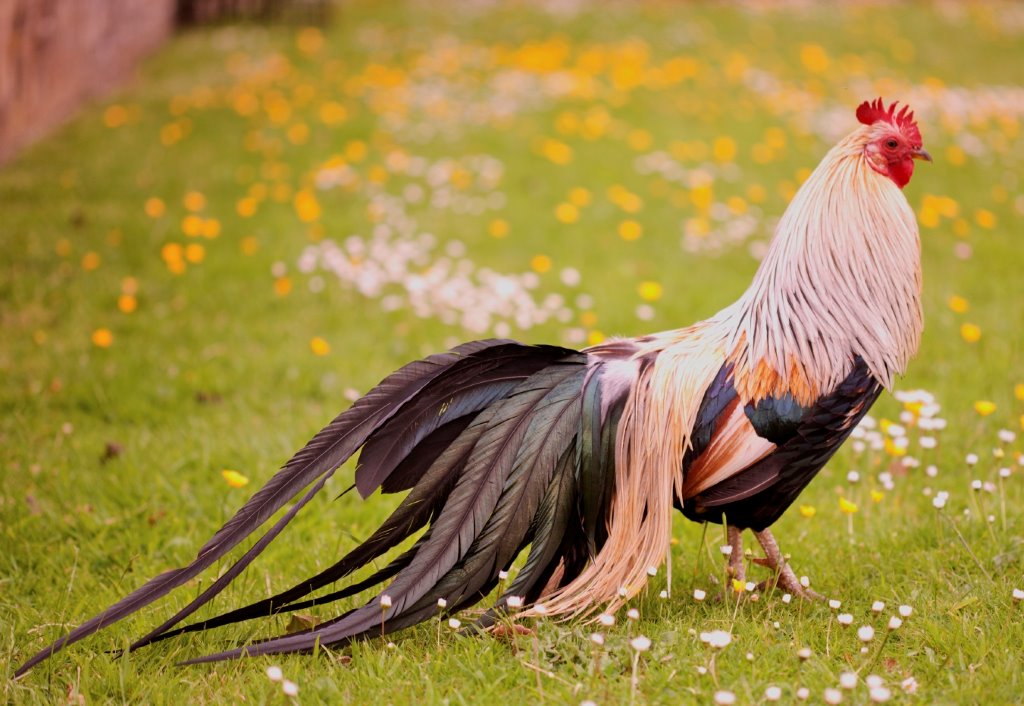
The Golden Duckwing Phoenix chicken is a rare ornamental longtail breed with black-and-gold feathering, a graceful body, and the long flowing tail feathers that make Phoenix chickens so striking. If you want a bird that looks different from ordinary backyard layers, this variety brings a lot of beauty to the flock.
Phoenix chickens have a longtail background tied to Japanese long-tailed fowl, including the Onagadori. However, the Phoenix breed itself developed in post-World War II Germany, where breeders worked to create a hardier longtail chicken that could keep the beauty of Japanese long-tailed birds while being easier to manage in ordinary poultry settings.
Cackle Hatchery® offers standard-size Phoenix chickens in Golden Duckwing, Silver Duckwing, Black Breasted Red, and White. Cackle also offers several Phoenix bantam varieties for customers who prefer a smaller longtail bird.
Appearance and Characteristics
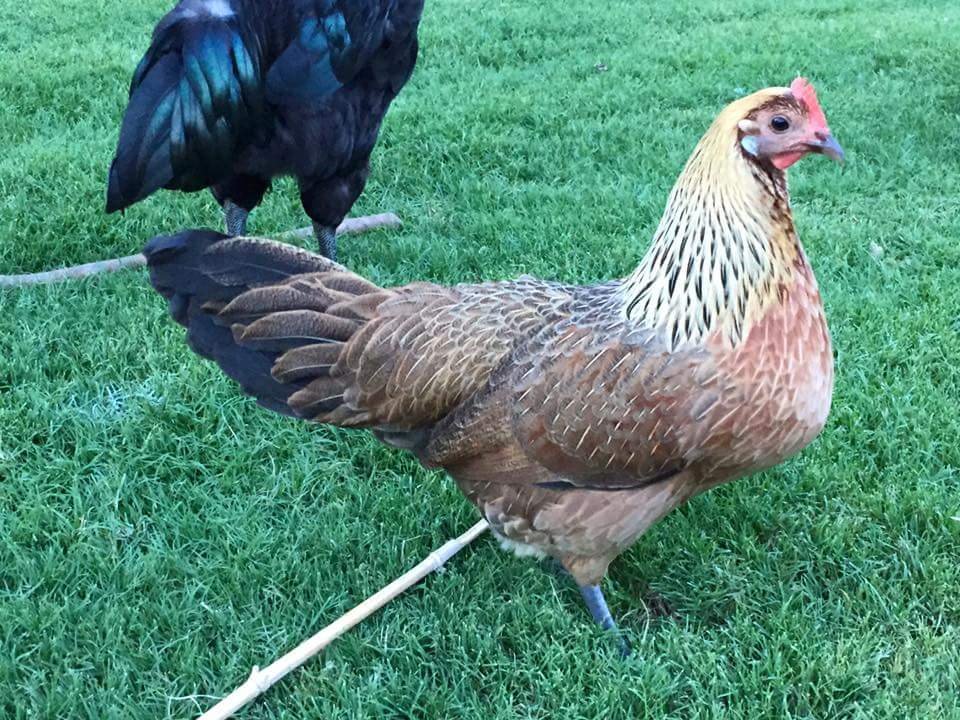
Golden Duckwing Phoenix chickens have beautiful black and gold feathering, long saddle feathers, and long tail feathers. Roosters are especially showy because the tail and saddle feathers give them that classic longtail look.
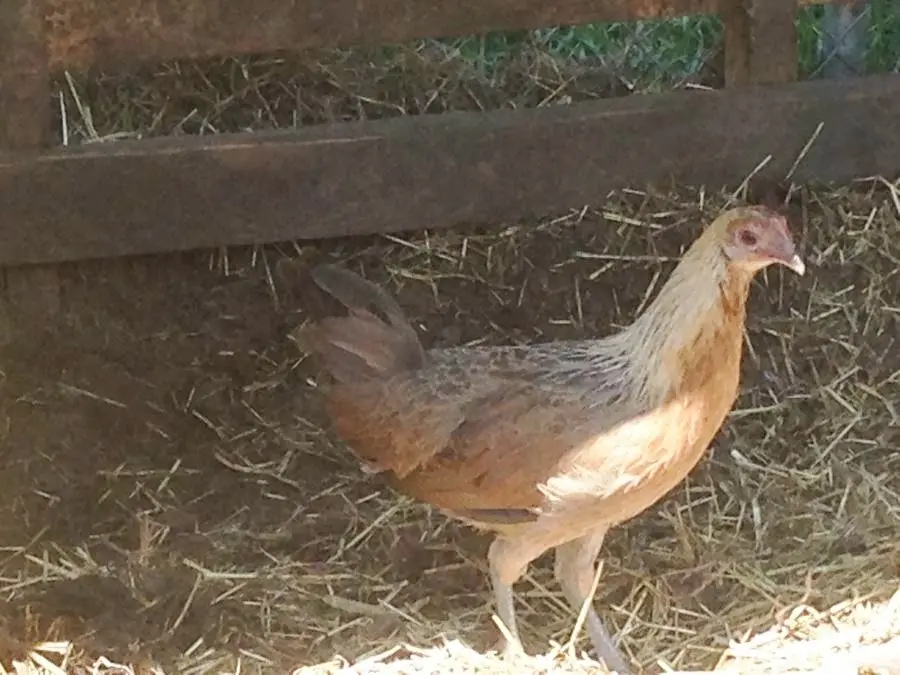
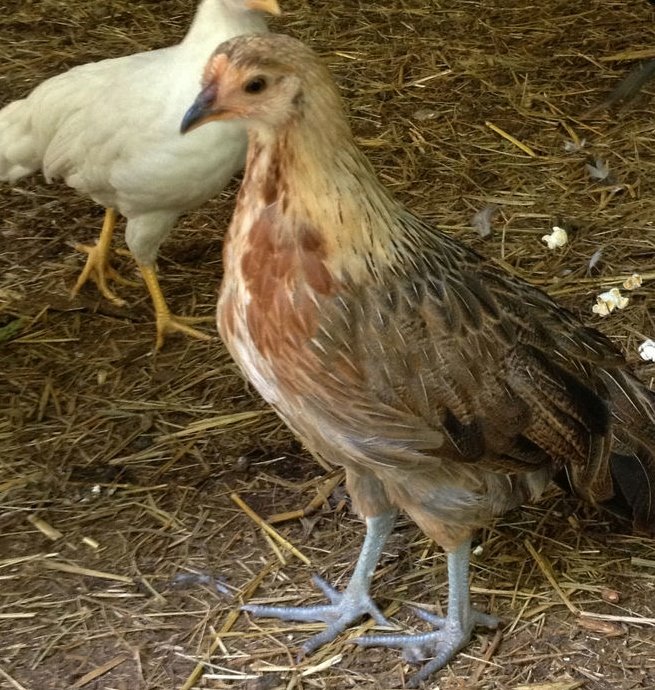
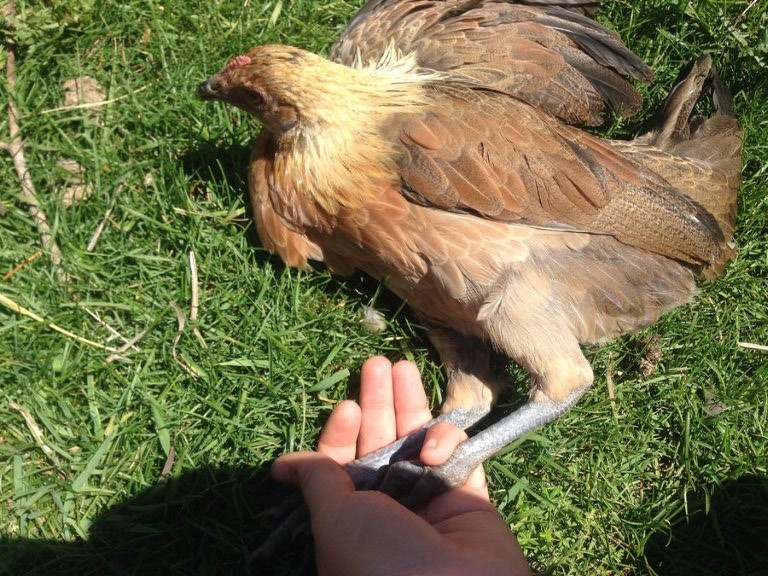
This variety comes from Silver Duckwing and Black Breasted Red Phoenix breeding. Because silver plays a strong role in producing the golden color, the golden color does not always breed true. A large percentage of silver can show up in breeding, so customers should expect some color variation if they hatch or breed from these birds.
That color note matters. If you want a rare ornamental bird with golden duckwing beauty, this variety is a wonderful choice. If you need every generation to hatch the exact same color, this is not the best fit.
Golden Duckwing Phoenix vs Silver Duckwing Phoenix
Golden Duckwing and Silver Duckwing Phoenix chickens belong to the same longtail breed family, but they have different color patterns.
Choose Golden Duckwing Phoenix if you want black and gold feathering with a warmer look. Choose Silver Duckwing Phoenix if you prefer silver, white, and black tones. Cackle’s Phoenix heritage spotlight lists both Golden Duckwing and Silver Duckwing among the standard-size Phoenix chickens offered by the hatchery.
Both varieties are ornamental, rare, and better suited for beauty and longtail interest than for meat or heavy egg production.
Standard Phoenix vs Phoenix Bantam
Golden Duckwing Phoenix chickens are available in standard size, and many people who like this breed also enjoy the Golden Duckwing Phoenix Bantam Chicken. Bantams are the miniature version and can be a good option if you want longtail beauty in a smaller bird.
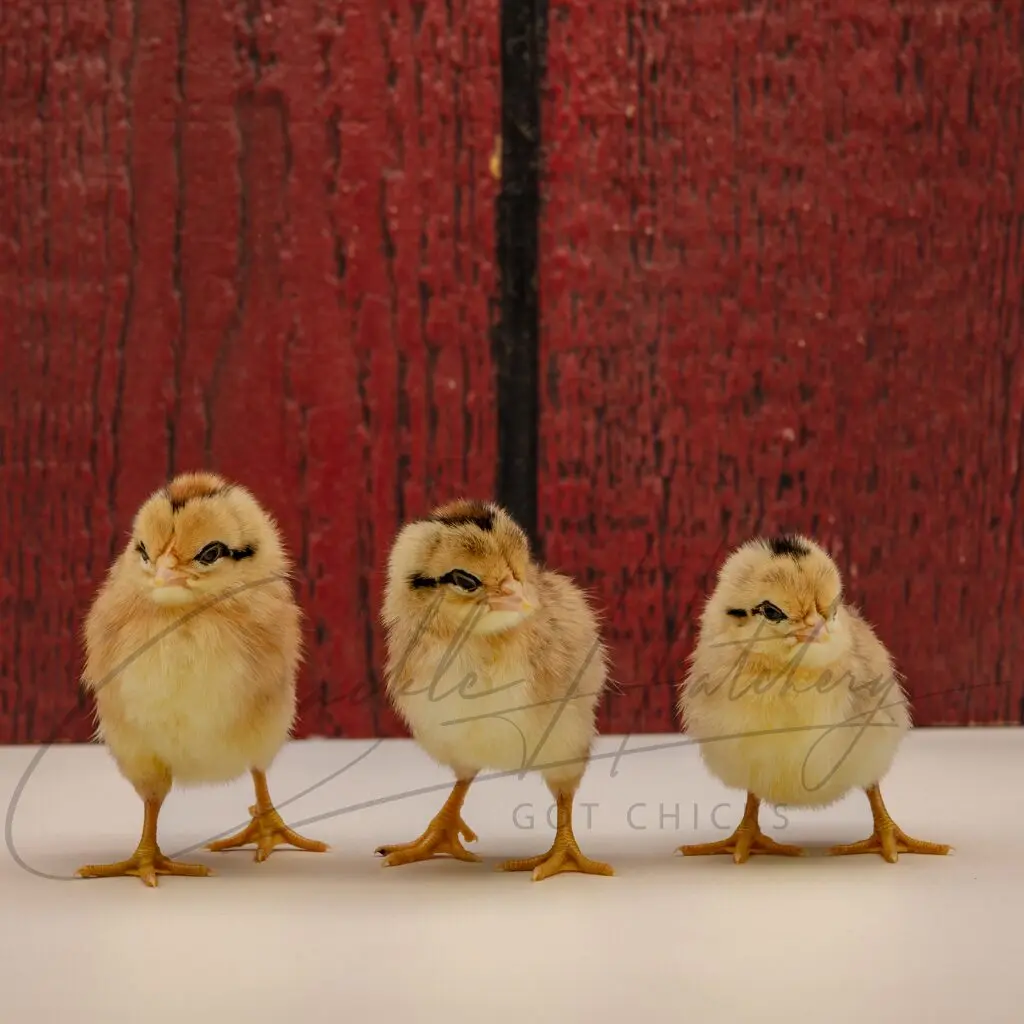
Cackle’s Golden Duckwing Phoenix Bantam page lists the bantam as sold as baby chicks only, with no sexing available, and seasonal shipping from early February through mid-August.
Choose the standard Golden Duckwing Phoenix if you want the larger longtail bird. Choose the bantam if you prefer a smaller ornamental chicken or have less coop space.
Longtail Breed Care
Golden Duckwing Phoenix chickens need more attention to housing than ordinary backyard layers. Longtail chickens require clean, dry housing, proper roosts, and enough room to protect their long tail feathers.
Cackle’s article Care and Feeding of Longtail Roosters explains that longtail chickens need specialized treatment to maintain their beauty. Housing, feeding, roosting, and feather condition all matter with these birds.
Cackle’s Breed Spotlight: Lovely Longtail Chickens also explains that longtail chickens have specialized genes that allow some tail feathers to grow longer than those of ordinary breeds. Phoenix chickens are one of the longtail breeds found in North America.
Egg Production and Utility
Golden Duckwing Phoenix chickens are ornamental birds first. They can lay small tinted eggs, but they are not production layers and should not be chosen for a heavy egg basket.
Their main value comes from their long tails, rare status, golden duckwing color, and showy flock presence. If your main goal is eggs, compare white egg layers, brown egg layers, or production hybrids instead.
They are not meat birds either. They are best for ornamental flocks, rare breed projects, poultry hobbyists, and customers who enjoy longtail chickens.
Temperament and Suitability
Golden Duckwing Phoenix chickens fit best with keepers who enjoy ornamental poultry and can provide proper longtail care. They can work in backyard settings, but they need dry housing, predator protection, and enough room to protect the tail feathers.
Because they are lighter and more active than heavy dual-purpose breeds, they may need more attention to fencing and housing. A covered run can help if you need to keep them contained and protect their feathers from rough weather.
Beginners can raise them if they understand they are specialty birds. If you want easy egg production, choose a laying breed. If you want rare longtail beauty, Golden Duckwing Phoenix chickens can be a rewarding choice.
Is the Golden Duckwing Phoenix Chicken Right for Your Flock?
Choose Golden Duckwing Phoenix chickens if you want:
A rare ornamental chicken
A longtail breed
Black and gold feathering
Small tinted eggs
A bird with showy flock appeal
A Phoenix variety tied to Japanese longtail ancestry
A standard-size longtail chicken
A bantam version to compare
A bird for ornamental or exhibition-style flocks
A Phoenix Standard Surplus option when available
Overall, this is a good choice if you want beauty, rarity, and longtail character. Golden Duckwing Phoenix chickens are not the right bird for meat or heavy egg production, but they are a beautiful option for poultry keepers who enjoy ornamental breeds.
If you are still comparing rare breeds, the Chicken Breed Selector and Chicken Breeds List Comparison Chart can help you sort birds by purpose, size, temperament, and flock goals.
Breed History and Preservation
Phoenix chickens have a longtail history connected to Japanese long-tailed fowl, especially the Onagadori. German breeders later developed the Phoenix after World War II, selecting for longtail beauty in a bird that could be maintained more easily outside Japan.
Cackle’s Phoenix heritage spotlight notes that the APA lists five standardized Phoenix color varieties, including Golden, which was admitted in 1983. The same article lists Golden Duckwing among the standard-size Phoenix chickens offered by Cackle Hatchery®.
Because Golden Duckwing Phoenix chickens are rare and ornamental, careful breeding and good feather care matter. They are specialty birds, not everyday utility chickens.
Recognition and Availability
The Golden Phoenix variety was admitted to the American Poultry Association Standard of Perfection in 1983. Cackle’s Phoenix heritage spotlight also lists Golden bantam as admitted in 1983.
You can choose Golden Duckwing Phoenix chicks when they are available. You may also want to compare the Golden Duckwing Phoenix Bantam Chicken or Long Tail Surplus when those options fit your flock plans. Long Tail Surplus can include Golden Duckwing Phoenix, but it is hatchery choice and does not guarantee a specific breed or color.
Before you plan your order, check the Availability Chart for current hatch and shipping options.
Related Breeds and Helpful Cackle Hatchery® Resources
If you like Golden Duckwing Phoenix chickens, you may also want to compare Silver Duckwing Phoenix, Black Breasted Red Phoenix, White Phoenix, Golden Duckwing Phoenix Bantams, Silver Duckwing Yokohamas, Sumatras, and other longtail breeds.
Helpful Cackle resources include Breed Spotlight: Lovely Longtail Chickens, Care and Feeding of Longtail Roosters, and Phoenix Chickens in the Heritage Breed Spotlight. These articles help customers understand longtail history, tail care, and Phoenix breed options.
For broader flock planning, browse rare chicken breeds, baby chicks for sale, and the Chicken Breed Selector.
FAQ: Golden Duckwing Phoenix Chicken
What is a Golden Duckwing Phoenix chicken?
A Golden Duckwing Phoenix is a rare ornamental longtail chicken known for black and gold feathering, long saddle feathers, long tail feathers, and small tinted eggs.
Where did Golden Duckwing Phoenix chickens originate?
Phoenix chickens have Japanese longtail ancestry, including ties to Onagadori-type fowl, but the Phoenix breed developed in post-World War II Germany.
Are Golden Duckwing Phoenix chickens rare?
Yes. Golden Duckwing Phoenix chickens are rare ornamental birds and are usually kept by people who enjoy longtail chickens, poultry projects, or showy flock additions.
Are Golden Duckwing Phoenix chickens recognized by the APA?
The Golden Phoenix variety was admitted to the American Standard of Perfection in 1983.
What do Golden Duckwing Phoenix chickens look like?
They have black and gold feathering, a graceful body, long saddle feathers, and long tail feathers.
Do Golden Duckwing Phoenix roosters have long tails?
Yes. Roosters are known for long tail and saddle feathers. Clean, dry housing and proper roosts help the tail develop and stay in better condition.
Do Golden Duckwing Phoenix chickens need special care?
Yes. Longtail chickens need clean, dry housing, proper roosts, enough space, and feather protection to keep their tails from breaking or wearing down.
Are Golden Duckwing Phoenix chickens good egg layers?
No. They may lay small tinted eggs, but they are ornamental chickens first and should not be chosen for heavy egg production.
What color eggs do Golden Duckwing Phoenix chickens lay?
They lay small tinted eggs. Customers usually choose this breed for appearance, rarity, and longtail traits rather than egg numbers.
Are Golden Duckwing Phoenix chickens good for meat?
No. They are best kept as ornamental or rare longtail chickens rather than meat birds.
Are Golden Duckwing Phoenix chickens friendly?
They can be manageable with steady care, but they are better described as ornamental specialty birds than calm production chickens.
Are Golden Duckwing Phoenix chickens good for beginners?
They can work for beginners who understand longtail care. Egg-focused beginners may prefer a simpler production layer.
Does Golden Duckwing Phoenix color breed true?
No. The golden color does not breed true. Silver is a strong factor in the breeding, so a large percentage of silver offspring can crop out.
What is the difference between Golden Duckwing Phoenix and Golden Duckwing Phoenix Bantam?
The standard Golden Duckwing Phoenix is the larger bird. The Golden Duckwing Phoenix Bantam is the miniature version and may be better for smaller spaces.
Can Golden Duckwing Phoenix come in Phoenix Standard Surplus?
Yes. Phoenix Standard Surplus or Long Tail Surplus may be an option when available, but surplus specials are hatchery choice and may not guarantee a specific variety.
Where can I check chick availability?
Check the Availability Chart for current hatch and shipping options.
Order from Cackle Hatchery
Choose Golden Duckwing Phoenix Standard Chicken from cackle hatchery. Review the product information above for current options, availability and ordering details.
Related Products
Related products


