






Buy Buckeye Chicken Online
Buy buckeye chicken online from cackle hatchery. Compare the bird or breed details, available options, current availability and delivery conditions before ordering.
Buckeye Chicken
Breed Facts
- Poultry Show Class: American Class
- Weights: Hen—–6 1/2 lbs Rooster——9 lbs
Pullet—5 1/2 lbs Cockerel—-8 lbs - Purpose and Type: Primary production, Egg Laying & Pet/Secondary meat source; Exhibition
- Egg Shell Color: Light to Meduim Brown
- Egg Production: 180-260 eggs per year (estimates only, see FAQ)
- Egg Size: Medium to Large
- Temperament: Active Yet Gentle
- Gender Accuracy: 80-85%
- Fertility Percentage: 60-75%
- Broody: Variable
- Mating Ratio: 9 Females to 1 Male
- Roost Height: 2 to 4 feet
- Country of Origin: American
- APA: Yes, Recognized by the American Standard of Perfection in 1904.
- TLC: Watch Status, Considered a sustainable heritage chicken breed
- BREEDER FARM SOURCE: Cackle Hatchery® Poultry Breeding Farm has been developing our bloodline or strain of pure Buckeyes since 2009.
Buckeye Chicken
Breed Overview and Origin
The Buckeye chicken is a true American heritage breed with a story worth telling. If you want a hardy, active bird with brown eggs, meat value, the Buckeye makes a strong backyard or homestead choice.
The name comes from Ohio’s nickname, the Buckeye State, and also matches the breed’s deep mahogany-bay color, which resembles a buckeye nut. Nettie Metcalf of Warren, Ohio, developed the breed, making the Buckeye unique in the American class as the only chicken breed credited entirely to a woman. The Livestock Conservancy notes that Metcalf began her breeding work with Buff Cochin, Barred Plymouth Rock, and other stock before shaping the Buckeye into a distinct American breed.
Buckeyes entered the American Standard of Perfection in the early 1900s. Cackle Hatchery® lists this breed as APA recognized in 1904 and as a sustainable heritage chicken with The Livestock Conservancy Watch status. Cackle has developed its pure Buckeye bloodline since 2009.
Appearance and Characteristics
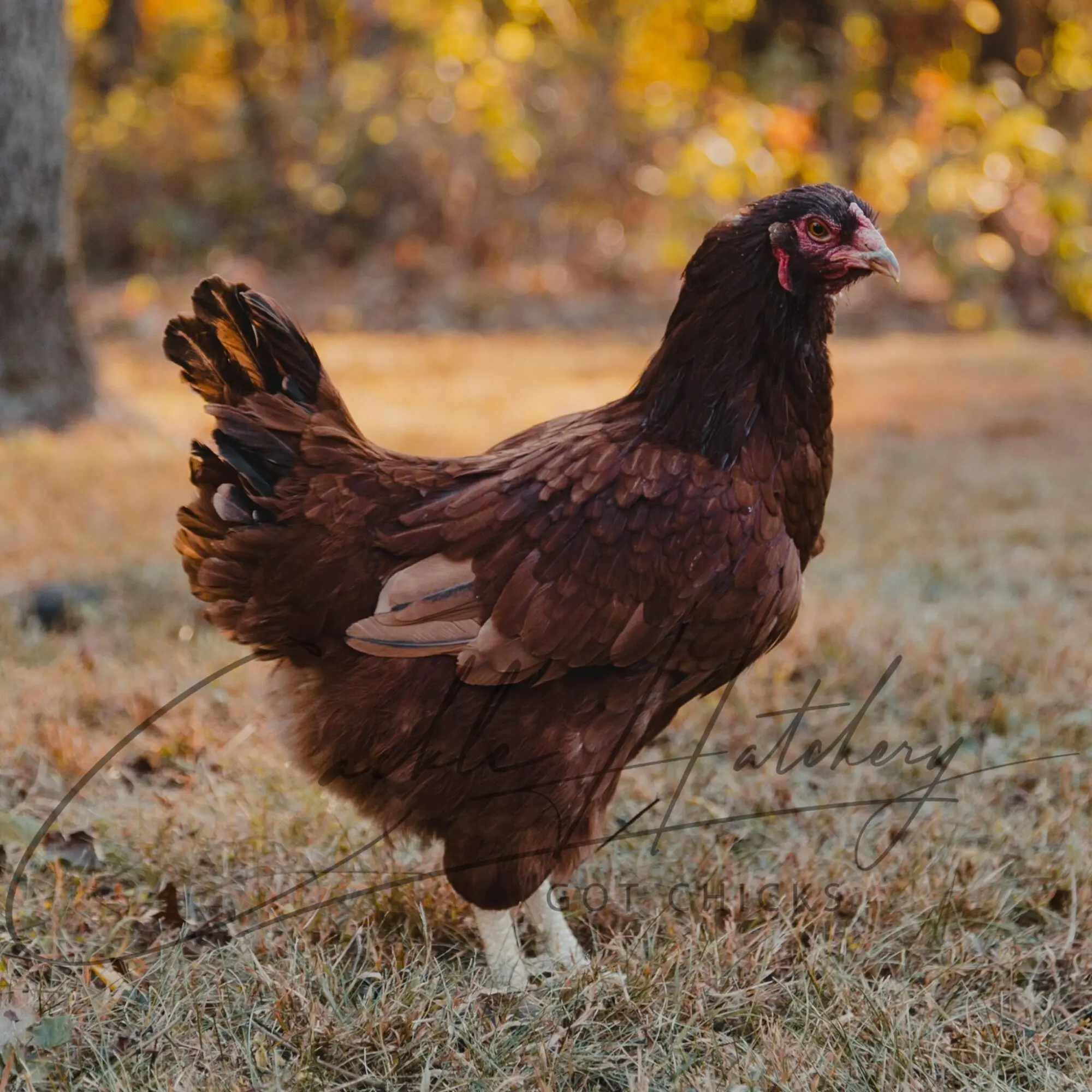
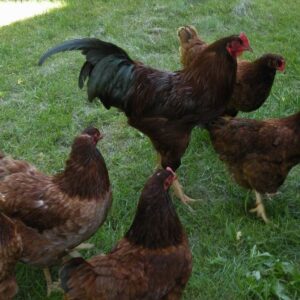
Buckeyes have a rich, dark red to mahogany-bay color, yellow skin, and a strong, compact build. They do not look like tall, narrow egg machines. Instead, they carry themselves with a broad, meaty frame and a practical farm-chicken shape.
The body type is part of what makes this breed special. Buckeyes have a slanted, short but broad back, powerful wings, a full breast, and meaty thighs. That build gives them more substance than many lighter laying breeds.
They also have a pea comb, which helps in cold weather because it sits closer to the head than a large single comb. If you live where winters get rough, that small comb is a real advantage. You still need a dry, draft-protected coop with good ventilation, but Buckeyes generally handle cold weather well.
Buckeye vs Rhode Island Red: Which Should You Choose?
Buckeyes and Rhode Island Red chickens can look similar at first because both are red American breeds that lay brown eggs. However, they are not the same bird.
Choose Buckeyes if you want a rarer heritage breed with a pea comb, strong body, active personality, and good cold-weather value. Choose Rhode Island Reds if you want one of America’s best-known brown egg breeds with a longer mainstream production reputation.
Buckeyes also tend to feel more unique in a flock. Their body shape, Ohio history, mouse-hunting reputation, and unusual male vocal sounds give them a personality all their own.
Egg Production and Utility
Buckeyes are dual-purpose chickens. That means they can help with both eggs and meat. Hens lay brown eggs, and the birds carry enough body to make sense for homesteads and small farms.
Cackle Hatchery® lists Buckeyes as great dual-purpose chickens that lay large brown eggs. Cackle also places them in its brown egg layer and cold weather chicken categories. Actual laying can vary with age, daylight, feed, weather, housing, and overall flock care.
Because they have strong bodies and meaty thighs, Buckeyes bring more table value than many lightweight egg breeds. They are not a modern fast-growing meat hybrid, but they fit the old-fashioned dual-purpose role very well.
Temperament and Suitability
Buckeyes are active, curious, and friendly birds. Many keepers enjoy them because they have little fear of people and often come across as bold rather than shy.
That confidence can be a blessing in the backyard. It makes them easier to enjoy and fun to watch. However, “too friendly” can also mean they may get underfoot, so you’ll want to move carefully around the coop and run.
This breed also has a reputation for hunting mice. Some keepers even compare them to cats because of their alert, active pursuit of small pests. They are not a replacement for proper feed storage and rodent control, but their natural activity makes them useful around a homestead.
Males can be especially entertaining. Buckeye roosters may make a wide range of sounds, including a low, dinosaur-like roar. If you like chickens with character, this breed has plenty.
Is the Buckeye Chicken Right for Your Flock?
Choose Buckeyes if you want:
A true American heritage chicken
A breed developed in Ohio
A brown egg layer
A dual-purpose bird for eggs and meat
A cold-hardy pea comb chicken
A friendly, active backyard bird
A breed created by Nettie Metcalf
A chicken known for hunting mice
A rare breed with conservation value
A bird with a bold, curious personality
Overall, the Buckeye is a good fit if you want a useful heritage breed with personality. It may not be the quietest or most common chicken in the yard, but it brings history, hardiness, and real farm value to the flock.
If you are still comparing breeds, the Chicken Breed Selector and Chicken Breeds List Comparison Chart can help you sort birds by purpose, egg color, temperament, and flock needs.
Breed History and Preservation
Nettie Metcalf developed the Buckeye in Warren, Ohio, during the late 1800s and early 1900s. She wanted a practical bird that could handle Ohio winters and still provide eggs and meat. Her work made history because the Buckeye remains the only American class chicken breed created entirely by a woman.
The breed first drew public attention in the early 1900s and entered the American Standard of Perfection soon after. Cackle lists APA recognition in 1904, while The Livestock Conservancy describes the breed’s early development and importance as a distinct Ohio creation.
For many years, Buckeyes stayed relatively uncommon. Today, they still carry conservation value. Cackle lists the breed with The Livestock Conservancy Watch status, which makes them a good option for customers who want a useful bird and a piece of American poultry history.
Recognition and Availability
The American Poultry Association recognizes the Buckeye in the American class. Cackle Hatchery® lists the breed as APA recognized in 1904 and describes it as a sustainable heritage chicken.
You can choose Buckeye chicks when they are in season. Before you plan your order, check the Availability Chart for current hatch and shipping options.
Related Breeds and Helpful Cackle Hatchery® Resources
If you like Buckeyes, you may also want to compare Rhode Island Red chickens, New Hampshire chickens, Delaware chickens, and other brown egg laying chickens.
For broader flock planning, browse cold weather chickens, rare chicken breeds, baby chicks for sale, and the Chicken Breed Selector.
FAQ: Buckeye Chicken
What is a Buckeye chicken?
A Buckeye chicken is an American heritage breed developed in Ohio by Nettie Metcalf. It is known for dark red plumage, a pea comb, brown eggs, meat value, cold hardiness, and an active personality.
Why is it called a Buckeye chicken?
The name comes from Ohio’s nickname, the Buckeye State. The breed’s rich mahogany-bay color also resembles the color of a buckeye nut.
Who created the Buckeye chicken?
Nettie Metcalf of Warren, Ohio, created the breed. The Buckeye is unique because it is the only American class chicken breed credited entirely to a woman.
When did the APA recognize Buckeye chickens?
Cackle Hatchery® lists Buckeyes as recognized by the American Poultry Association in 1904.
Are Buckeye chickens good egg layers?
Yes. Buckeye hens lay brown eggs and work well as dual-purpose birds. Actual production can vary with age, daylight, feed, housing, weather, and care.
What color eggs do Buckeyes lay?
They lay brown eggs. Cackle describes the breed as a large brown egg layer.
Are Buckeyes good for meat?
Yes. Buckeyes have a broad, meaty build, strong thighs, and dual-purpose value. They are not modern broiler hybrids, but they fit the old farm role of eggs and meat.
Are Buckeye chickens friendly?
Yes. Buckeyes are often friendly, curious, and bold around people. Some may show so little fear of humans that they can seem almost too friendly.
Are Buckeyes good for beginners?
Yes, they can work well for beginners who want a hardy heritage breed. Like all chickens, they still need clean water, balanced feed, dry housing, predator protection, and enough space.
Are Buckeyes cold hardy?
Yes. Their pea comb and sturdy body help them handle cold weather. Still, they need a dry, draft-protected coop with good ventilation.
Are Buckeyes good for free range?
Yes. Buckeyes are active birds and can do well in free-range or semi-free-range systems. They also need secure housing and predator protection.
Do Buckeye chickens really hunt mice?
Buckeyes have a reputation for actively pursuing mice, and some keepers compare them to cats for that reason. They can help around the homestead, but you should still store feed properly and use good rodent-control practices.
Do Buckeye roosters make unusual sounds?
Yes. Buckeye males can produce a range of sounds, including a low, dinosaur-like roar. That vocal personality is one of the breed’s memorable traits.
Are Buckeye chickens heritage chickens?
Yes. Buckeyes are a sustainable American heritage breed with conservation value. Cackle lists them with The Livestock Conservancy Watch status.
Where can I check chick availability?
Check the Availability Chart for current hatch and shipping options.
Ordering Information
Check the current price, stock status and selectable options displayed on this page. Read the product information and applicable policies before adding this item to your cart.
Related Products
Related products


