

Buy Broad Breasted White Turkey Online
Buy broad breasted white turkey online from cackle hatchery. Compare the bird or breed details, available options, current availability and delivery conditions before ordering.
Broad Breasted White Turkey
Breed Facts
- Poultry Show Class: Not Applicable
- Weights: Hen—–22 lbs (at 20 wks)
Tom—-34 lbs (at 20 wks) Projected Live Turkey Weights (No Guarantees) - Purpose and Type: Meat; Production; Commercial
- Egg Color: Off White with Brown specks
- Egg Production: Poor
- Egg Size: Large to Extra Large
- Temperament: Docile
- Fertility Percentage: 65-80%
- Mating Ratio: 4 Females to 1 Male
- Roost Height: 0 to 2 feet
- Country of Origin: North America
- APA: No
- Breeder Farm Source: “Cackle Hatchery® Poultry Breeding Farm” developing our bloodline or strain of Broad Breasted White Turkey Breed since 1987. Cackle Hatchery® currently using and selling the bloodlines of Aviagen Turkeys, Inc.
White Broad Breasted Turkey
Breed Overview and Origin
The White Broad Breasted Turkey is one of the most popular commercial meat turkey types in the United States. If you want a fast-growing turkey for homegrown Thanksgiving, family meals, homestead meat production, or a 4-H/FFA market project, this broad-breasted variety is the classic choice.
White Broad Breasted turkeys grow large, put on breast meat efficiently, and convert feed into table weight better than heritage turkey breeds. Cackle Hatchery® lists this variety as a meat, production, and commercial turkey with projected live weights of about 22 pounds for hens and 34 pounds for toms at 20 weeks, though live weights are not guaranteed. Cackle also notes that it has developed its Broad Breasted White Turkey strain since 1987 and currently uses Aviagen Turkeys, Inc. bloodlines.
Because this turkey was developed mainly for meat production, it does not fit the same role as a long-lived heritage turkey. Broad breasted turkeys are usually raised to harvest age rather than kept for breeding or long-term flock life. Cackle’s broad breasted turkey category explains that broad breasted varieties are not normally kept past harvest time because their large size can eventually cause health issues.
Appearance and Characteristics
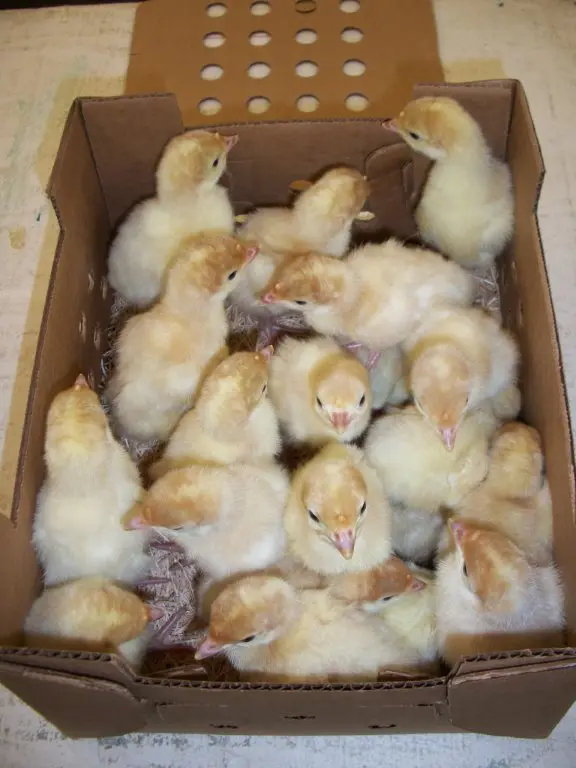
White Broad Breasted turkeys have white plumage, a large frame, a wide breast, and a fast-growing body type. Their white feathers also make them popular for processing because they leave a cleaner-looking dressed bird compared with darker-feathered varieties.
This variety is docile and practical for customers who want meat production more than ornamental value. In addition, White Broad Breasted turkeys are the type many Americans recognize from the Thanksgiving table.
Cackle Hatchery® lists the breed facts as:
- Purpose: Meat, production, commercial
- Temperament: Docile
- Egg color: Off white with brown specks
- Egg production: Poor
- Roost height: 0 to 2 feet
- Projected live weight: Hens about 22 pounds and toms about 34 pounds at 20 weeks, with no guarantee on final weight
Since these birds grow quickly and heavily, they need enough floor space, clean bedding, good ventilation, and easy access to feed and water. Low roosts or no roosts are usually better because heavy broad breasted turkeys are not built like lighter heritage birds.
White Broad Breasted vs Heritage Turkeys: How to Choose
White Broad Breasted turkeys and heritage turkeys serve different customer goals.
Choose White Broad Breasted Turkey poults if you want a fast-growing meat turkey with efficient feed conversion, broad breast development, and a traditional table turkey body type.
Choose a heritage turkey breed if you want a slower-growing turkey that can live longer, reproduce more naturally, forage more actively, and fit a breeding or preservation flock.
Choose Broad Breasted Bronze Turkey poults if you want a broad breasted meat turkey with classic bronze-colored feathering. Cackle describes Broad Breasted Bronze turkeys as modern meat turkeys bred for rapid growth and production, with Aviagen bloodlines used for quality and consistency.
Choose the Broad Breasted Turkey Surplus Special if you want a hatchery-choice bargain option that may include Broad Breasted White and/or Broad Breasted Bronze turkey poults. Cackle notes that this special may include all of one kind and that turkeys cannot ship to Hawaii.
For side-by-side comparison, customers can also use Cackle Hatchery’s Turkey Breeds List Comparison Chart.
Meat Production and Harvest Planning
White Broad Breasted turkeys are bred for meat production. As a result, they grow faster and heavier than heritage turkey breeds, especially when managed with proper nutrition, clean bedding, and enough space.
Cackle Hatchery® lists this variety as having excellent commercial meat purpose and poor egg production. That means customers should view these birds as table turkeys rather than egg layers or breeding birds.
Because Broad Breasted White turkeys can become very large, customers should plan harvest timing before ordering poults. Keeping them well beyond normal meat harvest age can lead to mobility stress and other health issues. Therefore, they work best for customers who have a clear meat-raising plan, proper brooder setup, and enough freezer or processing capacity.
Reproduction and Lifespan
White Broad Breasted turkeys generally do not reproduce as naturally or reliably as heritage turkeys. Their large breast size makes natural mating difficult, so commercial parent stock is commonly artificially inseminated to support hatchability.
Cackle Hatchery® notes that its parent stock are artificially inseminated to help ensure excellent hatchability. This makes sense for a production turkey selected for body size, breast width, and meat yield rather than natural reproduction.
In addition, White Broad Breasted turkeys usually have a shorter practical lifespan than heritage breeds because they are bred primarily for meat production. Customers who want a turkey breeding flock should compare Cackle’s Heritage Turkeys for Sale instead.
Brooding and Early Poult Care
Turkey poults need a clean, warm, well-managed brooder from the start. They can be more delicate than chicks during the first days, so customers should have heat, bedding, feed, and water ready before the poults arrive.
Cackle’s Starve-Out in Turkey Poults article explains that turkey poults may sometimes refuse to eat, a condition called starve-out, and that early action can help prevent losses.
For best results, provide:
- A warm brooder before poults arrive
- Clean bedding with good traction
- Fresh water at all times
- Proper turkey starter feed
- Enough feeder and waterer space
- Good ventilation without drafts
- Protection from crowding, chilling, and dampness
Cackle’s How to Brood Turkey Poults resource is a helpful follow-up for customers preparing their brooder before shipping week.
Keeping Turkeys with Chickens
Some backyard keepers raise turkeys and chickens together, but customers should understand the risk before mixing species. Blackhead disease is the main concern because turkeys can be highly vulnerable.
Cackle’s Keeping Turkeys With Chickens article explains that many backyarders do raise chickens and turkeys together, but conventional wisdom warns against it because turkeys are susceptible to blackhead disease.
Cackle’s Blackhead in Turkeys Is a Serious Disease article explains that blackhead, also called histomoniasis, is caused by Histomonas meleagridis protozoa and can seriously damage a turkey’s ceca and liver.
For that reason, customers should research local risk, coop history, soil conditions, and flock setup before housing turkeys with chickens.
Is the White Broad Breasted Turkey Right for You?
Choose White Broad Breasted turkeys if you want:
- A fast-growing meat turkey
- A broad-breasted table bird
- A common commercial Thanksgiving-type turkey
- A docile turkey for meat production
- Efficient feed-to-meat conversion
- A turkey raised primarily for harvest
- Poults for homestead meat, family meals, or market projects
- A white-feathered turkey that dresses cleanly
However, consider a heritage turkey if you want natural reproduction, a longer-lived flock bird, stronger foraging behavior, or a turkey for breeding. In short, White Broad Breasted turkeys fit best when customers want a practical meat bird, not a long-term ornamental or breeding turkey.
Shipping Note
Cackle Hatchery® cannot ship turkeys to Hawaii. Customers outside Hawaii should still check the product page, cart requirements, and Chicken Availability Chart for current hatch dates, shipping windows, and order timing.
Broad breasted turkey poults typically hatch and ship from February through July, and Cackle notes that customers can book broad breasted turkey orders as early as November.
Related Turkeys and Helpful Cackle Hatchery® Resources
Customers comparing White Broad Breasted turkeys may also want to review Cackle’s turkey categories and care resources. Start with Turkeys for Sale to compare broad breasted turkeys, heritage turkeys, and turkey specials. Cackle’s turkey category includes heritage, broad breasted, and bargain turkey options, with a comparison chart available for customers who are unsure which breed to choose.
Helpful Cackle Hatchery® links for this product page include:
- Broad Breasted Turkey Poults for Sale
- Broad Breasted Bronze Turkey poults
- Broad Breasted Turkey Surplus Special
- Heritage Turkeys for Sale
- Turkeys for Sale
- Turkey Breeds List Comparison Chart
- Heritage vs. Broad Breasted Turkeys
- Starve-Out in Turkey Poults
- How to Brood Turkey Poults
- Keeping Turkeys With Chickens
- How Many Eggs Does a Turkey Lay?
- Blackhead in Turkeys Is a Serious Disease
- Sexing Turkey Poults and Guinea Keets
- Chicken Availability Chart
FAQ: White Broad Breasted Turkey
What is a White Broad Breasted Turkey?
A White Broad Breasted Turkey is a fast-growing commercial meat turkey with white feathers, a wide breast, docile temperament, and strong feed-to-meat conversion.
Are White Broad Breasted turkeys good for meat?
Yes. White Broad Breasted turkeys are one of the most common meat turkey types in the United States. They grow quickly and develop the broad breast shape many customers want for table use.
How big do White Broad Breasted turkeys get?
Cackle Hatchery® lists projected live weights of about 22 pounds for hens and 34 pounds for toms at 20 weeks, though final weights are not guaranteed.
Are White Broad Breasted turkeys heritage turkeys?
No. White Broad Breasted turkeys are modern commercial meat turkeys. Heritage turkeys grow more slowly, usually live longer, and reproduce more naturally.
Can White Broad Breasted turkeys reproduce naturally?
They generally do not reproduce well naturally because their large breast size makes mating difficult. Commercial parent stock is commonly artificially inseminated for better hatchability.
Are White Broad Breasted turkeys good egg layers?
No. Cackle Hatchery® lists White Broad Breasted Turkey egg production as poor. Customers should choose this variety for meat production rather than eggs.
What color eggs do White Broad Breasted turkeys lay?
Cackle Hatchery® lists the egg color as off white with brown specks. Egg size is listed as large to extra large.
Are White Broad Breasted turkeys friendly?
They are generally docile. However, because they grow large, customers should still handle and manage them carefully, especially as they mature.
How long do you keep White Broad Breasted turkeys?
Most customers raise White Broad Breasted turkeys to harvest age rather than keeping them long term. Cackle’s broad breasted turkey category notes that broad breasted turkeys are not normally kept past harvest time because their large size can eventually cause health issues.
Are White Broad Breasted turkeys good for beginners?
They can work for beginners who prepare properly. New keepers should understand poult brooding, nutrition, space needs, growth rate, and harvest planning before ordering.
What do White Broad Breasted turkey poults need in the brooder?
They need warmth, clean bedding, fresh water, proper turkey starter feed, space, ventilation, and protection from drafts. Cackle’s turkey poult resources are helpful for preventing early problems such as starve-out.
What is starve-out in turkey poults?
Starve-out happens when turkey poults refuse to eat. Cackle Hatchery® explains that this can occasionally happen with poults and that there are steps customers can take to help prevent it.
Can I keep White Broad Breasted turkeys with chickens?
Some people do, but customers should understand the risk of blackhead disease before mixing chickens and turkeys. Cackle explains that conventional wisdom warns against keeping them together because turkeys are susceptible to blackhead.
What is blackhead disease in turkeys?
Blackhead disease, also called histomoniasis, is a serious turkey disease caused by Histomonas meleagridis protozoa. Cackle notes that it can damage the ceca and liver.
Can Cackle Hatchery® ship turkeys to Hawaii?
No. Cackle Hatchery® cannot ship turkeys to Hawaii.
What is the difference between White Broad Breasted and Broad Breasted Bronze turkeys?
White Broad Breasted turkeys have white feathers and are the most common commercial table turkey type. Broad Breasted Bronze turkeys are also modern meat turkeys but have bronze-colored feathering.
Where can I compare turkey breeds?
Customers can use Cackle Hatchery’s Turkey Breeds List Comparison Chart to compare turkey varieties before ordering.
Where can I check White Broad Breasted Turkey availability?
Customers can check Cackle Hatchery’s Chicken Availability Chart for current hatch and shipping timing. Turkey availability can change during the season, so checking the chart helps customers plan ahead.
Ordering Information
Check the current price, stock status and selectable options displayed on this page. Read the product information and applicable policies before adding this item to your cart.
Related Products
Related products