




Buy White Jersey Giant Chicken Online
Buy white jersey giant chicken online from cackle hatchery. Compare the bird or breed details, available options, current availability and delivery conditions before ordering.
White Jersey Giant Chicken
Breed Facts
- Poultry Show Class: American Class
- Weights: Hen—-10 lbs Rooster——–13 lbs
Pullet—-8 lbs Cockerel——-11 lbs - Purpose and Type: Primary production, Egg Laying & Pet/Secondary meat source
- Egg Shell Color: Brown
- Egg Production: 150 – 200 eggs per year. (estimates only, see FAQ)
- Egg Size: Large
- Temperament: Docile
- Gender Accuracy: 80-85%
- Fertility Percentage: 65-80%
- Broody: Setter
- Mating Ratio: 9 Females to 1 Male
- Roost Height: 2 to 4 feet
- Country of Origin: United States, New Jersey
- APA: Yes, Recognized by the Standard of Perfection in 1947
- TLC: Recovering Status, Considered a sustainable heritage chicken breed.
- Breeder Farm Source: Cackle Hatchery® Poultry Breeding Farm has been developing our bloodline/strain of pure White Jersey Giant Chickens since 1982.
White Jersey Giant Chicken
Breed Overview and Origin
The White Jersey Giant chicken is a big, calm, impressive bird with true American roots. If you want a gentle giant for your backyard or homestead flock, this breed is a good one to consider.
Jersey Giants originated in Burlington County, New Jersey, near Jobstown. John and Thomas Black developed the breed between 1870 and 1890 with the goal of creating a large table bird that could compete with turkey. The Livestock Conservancy notes that Black Javas, Black Langshans, and Dark Brahmas helped form the breed.
The White variety came later than the original Black Jersey Giant, but it carries the same giant breed type. These birds grow slowly compared with many common heavy breeds. However, with patience and good care, they eventually surpass many chickens in weight and size.
Appearance and Characteristics
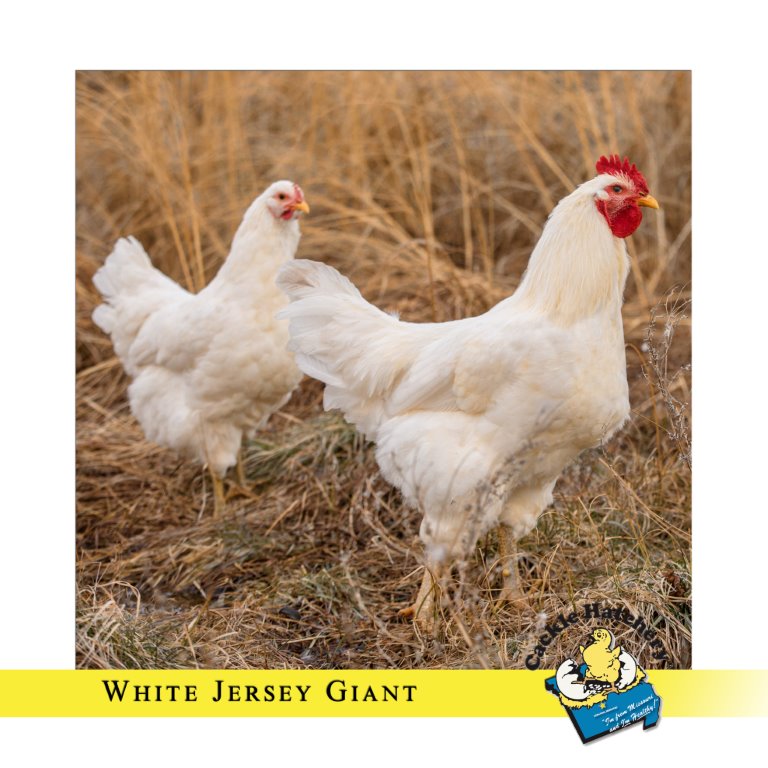
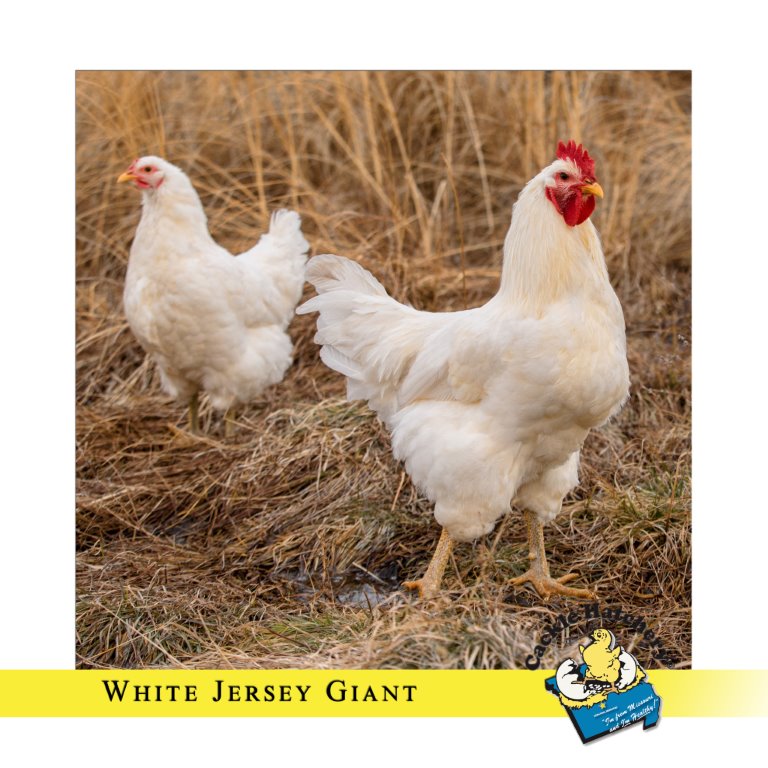
White Jersey Giants grow into large white birds with clean legs, yellow skin, and a sturdy dual-purpose body. Their legs and toes may look willow colored to nearly black, which is a classic Jersey Giant trait.
As chicks, they may not look pure white right away. The chick fuzz can be smoky gray, but the birds feather out white as they grow. That early gray color is normal and should not worry you.
Size is the big reason people notice this breed. Jersey Giants rank as the largest purebred chicken breed, with mature roosters commonly reaching about 13–15 pounds and hens around 10–11 pounds. The Livestock Conservancy notes that the black variety is often about a pound heavier than the white variety at maturity, but the white birds still grow into very large chickens.
White Jersey Giant vs Black Jersey Giant: Which Should You Choose?
White and Black Jersey Giants belong to the same breed family. Both are large, calm, slow-growing dual-purpose chickens.
Choose White Jersey Giants if you like a clean white bird with a giant frame and meat value. Choose Black Jersey Giant chickens if you prefer black feathers with a green sheen.
The Black variety came first and entered the American Standard of Perfection in 1922. The White variety followed in 1947. Both carry the impressive size and calm temperament that made the breed famous.
Production Type vs Show Type Jersey Giants
This is a practical flock bird, not a fast commercial broiler. Jersey Giants grow slowly and need more feed and time than modern meat strains. That is one reason commercial poultry moved away from them.
For a backyard or homestead flock, that slower growth may not be a problem. You get a calm, heavy bird with brown eggs, meat value, and old-fashioned breed character.
If your main goal is the fastest meat production possible, choose a modern meat bird instead. If you want a large heritage chicken that rewards patience, White Jersey Giants are a better fit.
Egg Production and Utility
White Jersey Giants are dual-purpose chickens. Hens lay brown eggs, and the birds eventually develop excellent meat value because of their size.
They are not lightweight egg machines, and they are not quick broilers. Instead, they fit the old farm role: a bird that can provide eggs while growing into a very large table chicken.
Cackle’s White Jersey Giant breed facts list large brown eggs, docile temperament, broody/setter tendencies, and APA recognition in 1947. Cackle also notes that its breeding farm has developed its pure White Jersey Giant bloodline since 1982.
Actual egg production can vary with age, daylight, feed, weather, housing, and overall care.
Temperament and Suitability
White Jersey Giants are usually calm and docile. Their size makes them stand out, but their temperament often makes them easy to enjoy.
Because they grow so large, they need enough room. Give them a sturdy coop, wide roosts, good floor space, dry bedding, and strong predator protection. Lower roosts are smart for giant breeds because heavy birds can injure their legs or feet when jumping down from high perches.
They can work well for homesteads, small farms, and backyard keepers who want large, gentle birds. They are also a good choice if you enjoy slower-growing heritage poultry and do not mind the extra feed and time it takes to raise them properly.
Is the White Jersey Giant Chicken Right for Your Flock?
Choose White Jersey Giants if you want:
A very large dual-purpose chicken
A brown egg layer
A calm, docile flock bird
A white chicken with giant breed size
A heritage American breed
A bird with strong meat value
A slower-growing chicken for patient keepers
A backyard bird with impressive presence
A breed recognized by the APA in 1947
Overall, this is a good choice if you want a gentle giant and have the space to raise large birds well. White Jersey Giants are not the fastest growers, but they bring size, calmness, and heritage value to the flock.
If you are still comparing breeds, the Chicken Breed Selector and Chicken Breeds List Comparison Chart can help you sort birds by size, purpose, egg color, and flock needs.
Breed History and Preservation
The Jersey Giant began in New Jersey in the late 1800s. John and Thomas Black developed it as a large meat bird for markets that wanted heavy poultry. Their breeding work used Black Javas, Black Langshans, and Dark Brahmas to build size and substance.
The Black Jersey Giant was the original variety. The White variety developed later and gained American Poultry Association recognition in 1947. The Livestock Conservancy notes that the APA accepts Jersey Giants in black, white, and blue varieties.
Jersey Giants never became modern commercial broilers because they take longer to mature and need more feed than faster-growing meat hybrids. Even so, they remain valuable for keepers who appreciate heritage poultry, large frames, calm temperaments, and old-fashioned dual-purpose traits.
Recognition and Availability
The American Poultry Association recognizes Jersey Giants in the American class. The White variety entered the Standard of Perfection in 1947. Cackle lists White Jersey Giants as a sustainable heritage chicken breed with The Livestock Conservancy Recovering status.
You can choose White Jersey Giant chicks when they are in season. Before you plan your order, check the Availability Chart for current hatch and shipping options.
Related Breeds and Helpful Cackle Hatchery® Resources
If you like White Jersey Giants, you may also want to compare Black Jersey Giant chickens, Black Australorp chickens, Light Brahmas, and Dark Brahmas.
For broader flock planning, browse brown egg laying chickens, baby chicks for sale, cold weather chickens, and dual-purpose chickens.
FAQ: White Jersey Giant Chicken
What is a White Jersey Giant chicken?
A White Jersey Giant chicken is the white variety of the Jersey Giant breed. It is a very large American dual-purpose chicken known for brown eggs, calm temperament, and strong meat value.
Where did White Jersey Giants originate?
The Jersey Giant breed originated in Burlington County, New Jersey, near Jobstown. John and Thomas Black developed the breed between 1870 and 1890.
When did the APA recognize White Jersey Giants?
The American Poultry Association recognized the White Jersey Giant variety in 1947.
Are White Jersey Giants good egg layers?
They can be useful brown egg layers, especially for such a large breed. However, they are not high-production egg birds. Actual laying depends on age, daylight, feed, weather, housing, and care.
What color eggs do White Jersey Giants lay?
They lay brown eggs. Cackle lists the egg size as large.
Are White Jersey Giants good for meat?
Yes. Jersey Giants were developed for meat, and they eventually grow into very large birds. They grow slowly, though, so they are not as feed-efficient as commercial broilers.
How big do White Jersey Giants get?
Jersey Giant roosters commonly reach about 13–15 pounds, and hens often reach about 10–11 pounds. The white variety may mature slightly lighter than the black variety, but it is still one of the largest chickens you can raise.
Are White Jersey Giants slow to mature?
Yes. They grow more slowly than many common heavy breeds, but they eventually surpass many chickens in weight and size.
Are White Jersey Giants friendly?
Yes. Jersey Giants are typically calm and docile. Their large size means they need enough space, sturdy housing, and lower roosts.
Are White Jersey Giants good for beginners?
They can work well for beginners who have enough room and understand that giant breeds take longer to mature. They need clean water, balanced feed, dry housing, predator protection, and enough space.
Why are White Jersey Giant chicks smoky gray?
White Jersey Giant chicks can hatch with smoky gray fuzz. As they grow, they feather out white.
What is the difference between White and Black Jersey Giants?
Both belong to the same breed. White Jersey Giants feather out white, while Black Jersey Giants have black feathers with a green sheen. The Black variety entered the Standard in 1922, and the White variety followed in 1947.
Are White Jersey Giants heritage chickens?
Yes. They are part of a historic American breed developed in New Jersey. Cackle lists them as a sustainable heritage chicken breed with Recovering status.
Do White Jersey Giants go broody?
They may go broody. Cackle lists the breed as a setter, which means hens may show broody tendencies.
Where can I check chick availability?
Check the Availability Chart for current hatch and shipping options.
Ordering Information
Check the current price, stock status and selectable options displayed on this page. Read the product information and applicable policies before adding this item to your cart.
Related Products
Related products


