



Buy Cream Legbar Chicken Online
Buy cream legbar chicken online from cackle hatchery. Compare the bird or breed details, available options, current availability and delivery conditions before ordering.
Cream Legbar Chicken
Breed Facts
- Poultry Show Class: Not Applicable
- Weights: Hen—–5 lbs
Rooster——7.5 lbs
Pullet–4 1/2 lbs
Cockerel—– 6.5 lbs - Purpose and Type: Egg Laying; Production
- Egg Shell Color: Minty Blue, Aqua Blue, Green
- Egg Production: 180-200 eggs per year (estimates only, see FAQ)
- Egg Size: Medium – Large
- Temperament: Active
- Gender Accuracy: 85-90%
- Fertility Percentage: 60-75%
- Broody: Variable
- Mating Ratio: 12 Females to 1 Males
- Roost Height: 2 to 4 feet
- Country of Origin: Britian
- APA: No
- TLC: No
- Breeder Farm Source: Cackle Hatchery® Poultry Breeding Farm has been developing our bloodline or strain of Cream Legbar since 2017.
Cream Legbar Chicken
Breed Overview and Origin
The Cream Legbar Chicken is a rare British auto-sexing chicken breed known for blue eggs, a small crest, active temperament, hardiness, and the ability to distinguish male and female chicks at hatch by down color and markings. If you want a practical blue egg layer with built-in chick-sexing traits, Cream Legbars are one of the most useful colored egg breeds for backyard flocks.
Cream Legbars were developed in the early twentieth century at the Genetical Institute of Cambridge University by Reginald Crundall Punnett and Michael Pease. The Cream variety came from Legbar breeding work that included Gold Legbars, White Leghorns, and cream-colored Araucanas. The Araucana influence helped introduce the crest and blue egg genetics into the Cream Legbar line. The Poultry Club of Great Britain notes that Cream Legbars have crests and lay blue eggs, while the Rare Breed Survival Trust explains that the breed was standardized in 1958.
Although Cream Legbars were once at risk after blue eggs fell out of demand, they have become popular again with customers who want colorful egg baskets, practical laying ability, and chicks that can be sexed early. Cackle Hatchery® offers Cream Legbar baby chicks as a colored egg layer option and notes that its current breeding program includes both “Cream” and “Golden Crele” colors within the flock.
Appearance and Characteristics
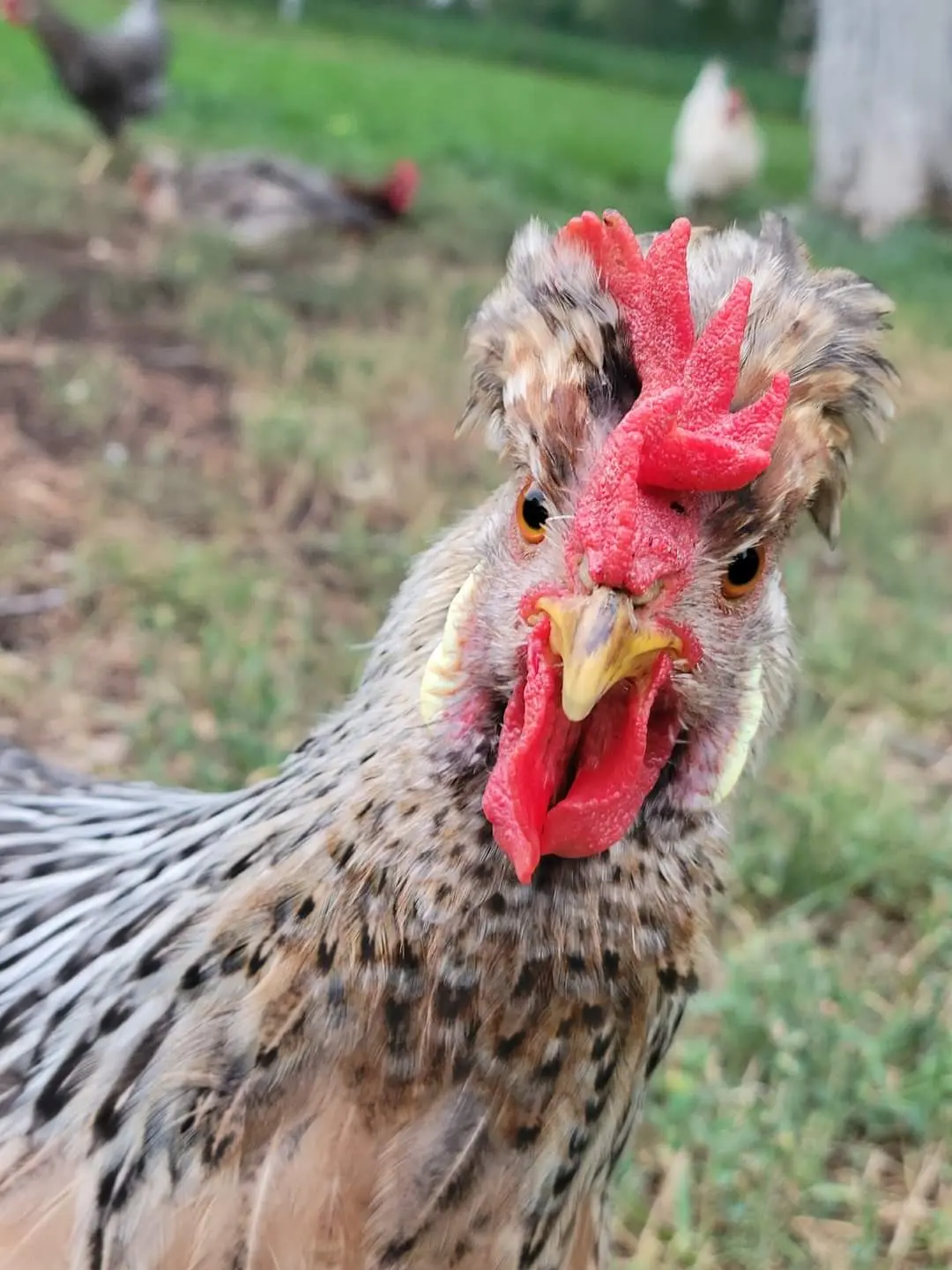
Cream Legbars are attractive, light-bodied chickens with a small crest, single comb, active posture, and barred plumage. They are not heavy dual-purpose birds. Instead, they are active, curious, and practical layers that bring both personality and blue egg value to a flock.
Male Cream Legbars have cream-barred neck hackles, cream-barred saddle hackles with dark gray barring, and dark gray barred feathers in the breast and tail. Their wings show dark gray barring with cream tips, while the crest often blends cream and gray.
Female Cream Legbars have softer coloring. Their neck hackles are lightly barred cream, the breast is often salmon-colored, and the body is silver-gray with broad barring. The wings may be speckled gray, while the tail is silvery gray with light barring.
Because Cackle Hatchery’s flock includes both Cream and Golden Crele color genetics, offspring may include both colors. The percentage of each color can vary from hatch to hatch.
Auto-Sexing Chick Advantage
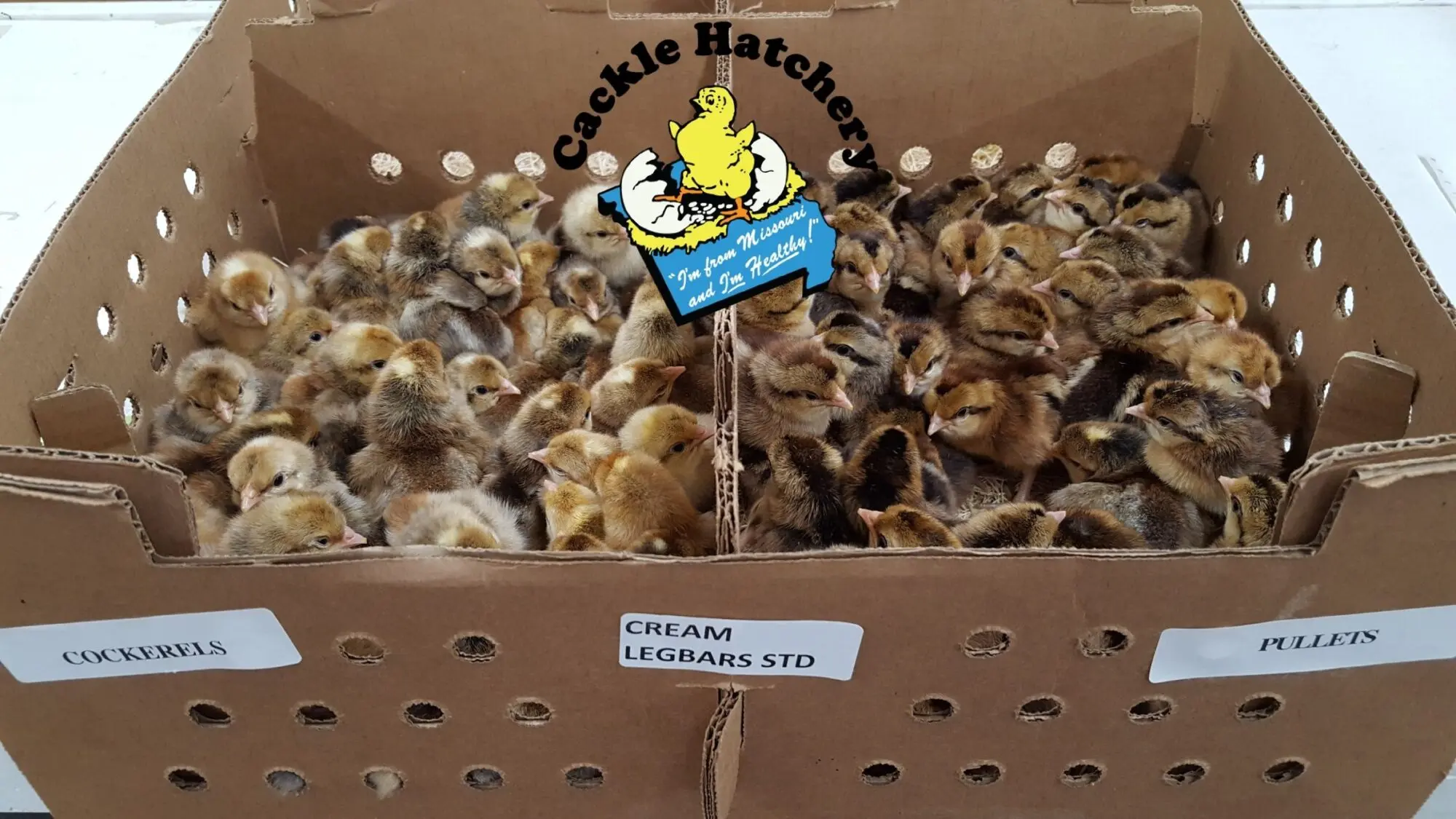
One of the biggest reasons customers choose Cream Legbars is their auto-sexing ability. This means male and female chicks can be identified at hatch by down color and pattern.
Auto-sexing is different from regular hatchery sexing. With an auto-sexing breed, the chick’s markings are tied to sex-linked genetics, so males and females look different as day-old chicks. That makes Cream Legbars especially useful for customers who want to plan flock balance early.
This trait was one of the main goals behind early Legbar development. Open Poultry Standards Australia notes that the aim was to create an auto-sexing utility breed focused on egg laying, where male and female day-old chicks could be easily sexed by color.
For backyard customers, this trait can make flock planning easier. However, customers should still check current Cackle Hatchery® ordering options and sexing policies before checkout.
Cream Legbar Egg Color and Laying Ability
Cream Legbars are best known for laying blue eggs. Some hens may lay blue-green or greenish eggs, depending on individual genetics and breeding lines. The blue egg trait comes from Araucana ancestry, which helped shape the Cream Legbar variety.
Cream Legbars are usually kept as egg layers rather than meat birds. Breed references often describe them as productive layers, with Legbar hens capable of producing around 180 or more eggs per year.
Egg production can vary by hen, age, feed, daylight, season, and flock management. Still, Cream Legbars remain a strong choice for customers who want a blue egg layer that is more predictable than many mixed colored egg layers.
For customers comparing blue egg breeds, Cackle’s Best Blue Egg Layers article is a useful internal resource.
Temperament and Flock Suitability
Cream Legbars are active, curious, charming chickens. They are both cold and heat hardy when managed properly, making them a flexible option for many backyard and small-farm flocks.
Because they are alert and energetic, Cream Legbars usually enjoy room to move, scratch, and explore. They can do well in secure outdoor runs and supervised free-range setups. However, customers should still provide predator protection, clean housing, and dependable nighttime shelter.
This variety can work well for:
- Backyard blue egg flocks
- Colored egg basket projects
- Customers who want auto-sexing chicks
- Active outdoor flocks
- Small farms and homesteads
- Keepers who enjoy curious, energetic chickens
- Flocks with other colored egg layers
- Customers who want a rare British breed
However, customers who prefer a very calm, heavy, low-energy chicken may prefer a more docile dual-purpose breed. Overall, Cream Legbars fit best with keepers who want active birds, blue eggs, and practical flock-planning traits.
Cream Legbar vs Ameraucana
Cream Legbars and Ameraucanas both appeal to customers who want blue eggs, but they are different breeds.
A Cream Legbar is a British auto-sexing breed with a crest and blue egg genetics. Chicks can be sexed at hatch by down color and markings.
An Ameraucana chicken is an American blue egg breed with muffs, beard, pea comb, slate legs, tail, and specific breed traits.
Choose Cream Legbar chickens if you want blue eggs plus auto-sexing chicks.
Choose Ameraucanas if you want a true Ameraucana type with muffs, beard, and recognized Ameraucana breed features.
Cream Legbar vs Easter Egger™
Cream Legbars and Easter Egger™ chickens can both lay colored eggs, but they are not the same.
A Cream Legbar is an auto-sexing breed with known breed history, a crest, and blue egg genetics.
An Easter Egger™ is usually a mixed or non-standard colored egg layer. Easter Eggers™ can be fun and useful backyard birds, but their appearance and egg color may vary more widely.
Choose Cream Legbar chickens if you want a more defined breed with blue egg potential and auto-sexing chicks.
Choose Easter Egger™ chickens if you want a colorful, budget-friendly layer and are flexible on final egg shade.
Cream Legbar vs Olive Egger™
Cream Legbars are often used in colored egg breeding programs, including Olive Egger™ projects. Cackle Hatchery® uses purebred Cream Legbar roosters crossed with purebred Welsummer hens to create its Olive Egger™ chickens.
A Cream Legbar is a blue egg layer.
An Olive Egger™ chicken is a hybrid bred to lay olive-colored eggs by combining blue egg genetics with dark brown egg genetics.
Choose Cream Legbar chickens if you want blue eggs and an auto-sexing breed.
Choose Olive Egger™ chickens if your main goal is olive-green eggs.
Is the Cream Legbar Chicken Right for Your Flock?
Choose Cream Legbar chickens if you want:
- Blue eggs
- Auto-sexing chicks
- A rare British breed
- A small crest
- Active, curious flock behavior
- Heat and cold hardiness
- A practical colored egg layer
- A breed with Cambridge genetics history
- A chicken that works well in colorful egg basket flocks
However, consider another breed if you want a heavy meat bird, a very docile lap chicken, or guaranteed identical feather color from every hatch. In short, Cream Legbars are best for customers who want blue eggs, active birds, and easy chick identification at hatch.
Care and Housing Tips
Cream Legbars need the same dependable care as other standard-size laying chickens. They do best with a clean coop, secure run, proper feed, fresh water, and predator protection.
For best results, provide:
- A dry, well-ventilated coop
- Predator-resistant fencing
- Clean bedding
- Fresh water at all times
- Balanced chick starter and age-appropriate feed
- Enough roosting space
- Nest boxes when pullets near laying age
- Shade and airflow during hot weather
- Protection from drafts and damp bedding in cold weather
- Secure outdoor space for active foraging
Because Cream Legbars are energetic and curious, they benefit from space to explore. If you free range, train birds to return to secure housing at night and watch for predator pressure.
Recognition and Availability
Cream Legbars are recognized by the Poultry Club of Great Britain and are listed under auto-sexing soft feather light breeds. The breed was standardized in 1958 after its development from Legbar, Leghorn, and Araucana ancestry.
Cackle Hatchery® offers Cream Legbar baby chicks as a colored egg layer option. Since hatch dates and shipping windows can change during the season, customers should check Cackle Hatchery’s Chicken Availability Chart before ordering.
For customers comparing colored egg breeds, Cackle’s Colored Egg Layers for Sale category is a helpful place to browse related options.
Related Breeds and Helpful Cackle Hatchery® Resources
Customers who like Cream Legbars may also enjoy other blue egg layers, colored egg layers, and breeds used in specialty egg-color programs.
Helpful Cackle Hatchery® links for this product page include:
- Colored Egg Layers for Sale
- Olive Egger™ chickens
- Easter Egger™ chickens
- Ameraucana Chickens
- Blue Ameraucana chickens
- Lavender Ameraucana chickens
- Welsummer chickens
- Cackle Hatchery’s Best Blue Egg Layers
- Baby chicks for sale
- Chicken Breed Selector
- Chicken Breeds List Comparison Chart
- Chicken Availability Chart
FAQ: Cream Legbar Chicken
What is a Cream Legbar Chicken?
A Cream Legbar Chicken is a rare British auto-sexing breed known for blue eggs, a small crest, active temperament, and the ability to identify male and female chicks by down color at hatch.
Where did Cream Legbar chickens originate?
Cream Legbars originated in Britain at the Genetical Institute of Cambridge University. Reginald Crundall Punnett and Michael Pease developed the Legbar lines through early twentieth-century genetics work.
What breeds were used to create Cream Legbars?
Cream Legbars were developed from Gold Legbars, White Leghorns, and cream-colored Araucanas. The Araucana influence helped introduce the crest and blue egg genetics.
Are Cream Legbars auto-sexing?
Yes. Cream Legbar chicks can be sexed at hatch by their down color and markings.
What does auto-sexing mean?
Auto-sexing means male and female chicks look different at hatch because of sex-linked feather or down-color genetics. This allows chick sex to be identified early by appearance.
Do Cream Legbars lay blue eggs?
Yes. Cream Legbars are known for blue eggs, although some hens may lay blue-green or greenish eggs.
Why do Cream Legbars lay blue eggs?
The blue egg trait came from Araucana ancestry used in the development of the Cream Legbar variety.
Are Cream Legbars good egg layers?
Yes. Cream Legbars are practical laying chickens, and breed references commonly describe Legbar hens as producing around 180 or more eggs per year.
What color are Cream Legbar eggs?
Cream Legbar eggs are usually blue, blue-green, or greenish blue, depending on the hen and line.
Are Cream Legbars friendly?
Cream Legbars are active, curious, and charming. They may not be as calm as heavy dual-purpose breeds, but they can be enjoyable backyard chickens when handled and managed well.
Are Cream Legbars good for beginners?
Yes, they can work well for beginners who want blue eggs and active birds. However, customers should provide secure fencing and enough space because Cream Legbars are curious and energetic.
Are Cream Legbars cold hardy?
Yes, Cream Legbars can be cold hardy with proper care, including dry bedding, good ventilation, and draft protection.
Are Cream Legbars heat hardy?
Yes, they can handle warm weather with shade, airflow, fresh water, and good flock management.
What do male Cream Legbars look like?
Males have cream-barred neck and saddle hackles, dark gray barring in the breast and tail, and cream-gray crest coloring.
What do female Cream Legbars look like?
Females have softly barred cream neck hackles, salmon-colored breasts, silver-gray barred bodies, speckled gray wings, and silvery gray tails with light barring.
Why does Cackle mention Cream and Golden Crele colors?
Cackle Hatchery® notes that its Cream Legbar breeding program includes both Cream and Golden Crele colors. Offspring may include both, and the percentage of each can vary.
What is the difference between Cream Legbar and Ameraucana chickens?
Cream Legbars are British auto-sexing chickens with crests and blue eggs. Ameraucanas are American blue egg chickens with muffs, beards, pea combs, slate legs, tails, and specific Ameraucana breed traits.
What is the difference between Cream Legbar and Easter Egger™ chickens?
Cream Legbars are a defined auto-sexing breed with blue egg genetics. Easter Eggers™ are mixed or non-standard colored egg layers that can vary widely in appearance and egg color.
Are Cream Legbars used to make Olive Eggers™?
Yes. Cackle Hatchery® uses purebred Cream Legbar roosters crossed with purebred Welsummer hens to create its Olive Egger™ chickens.
Where can I check Cream Legbar availability?
Customers can check Cackle Hatchery’s Chicken Availability Chart for current hatch and shipping timing. Availability can change during the season, so checking the chart helps customers plan ahead.
Ordering Information
Check the current price, stock status and selectable options displayed on this page. Read the product information and applicable policies before adding this item to your cart.
Related Products
Related products