


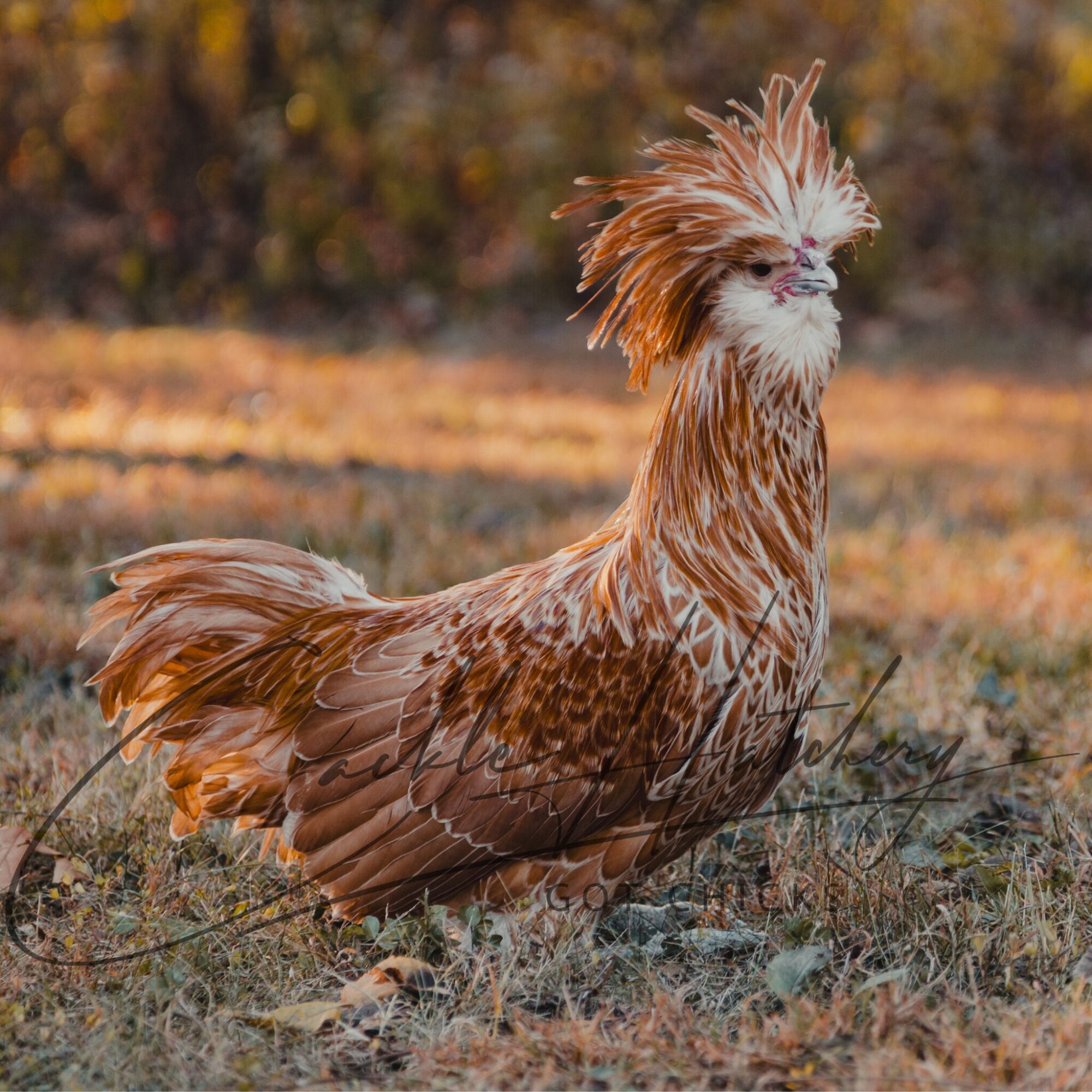
Blue Polish Chicken
Breed Facts
- Poultry Show Class: Continental Class
- Weights: Hen—–4 1/2 lbs
Rooster——-6 lbs
Pullet—4 lbs
Cockerel—–5 lbs - Purpose and Type: Egg Laying; Exhibition
- Egg Shell Color: White
- Egg Production: Good
- Egg Size: Medium
- Temperament: Docile/Flighty
- Fertility Percentage: 40-55%
- Broody: Non Setters
- Mating Ratio: 8 Females to 1 Male
- Roost Height: 2 to 4 feet
- Country of Origin: Netherlands
- APA: Yes, Recognized by the American Standard of Perfection in 1963
- TLC: Recovering Status, Considered a sustainable heritage chicken breed.
- Breeder Farm Source: Cackle Hatchery® Poultry Breeding Farm has been developing our bloodline or strain of color varieties of the Polish chicken since 1971.
Blue Polish Chicken (Non-Bearded)
Breed Overview and Origin
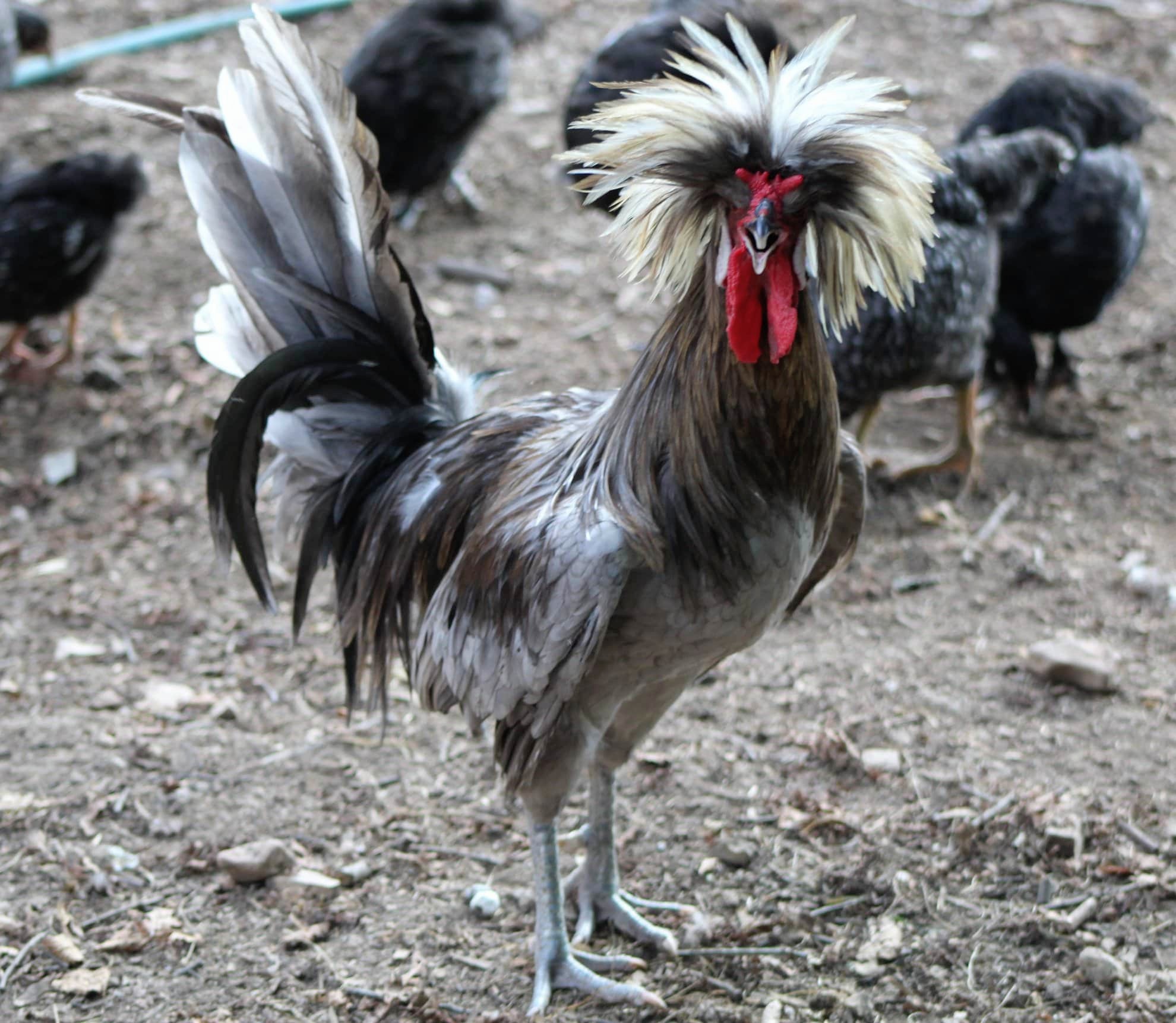
The Blue Polish chicken, also known as the White Crested Blue Polish, is a striking ornamental breed with blue feathering and a bright white crest. If you want a chicken that looks different from the usual backyard layer, this non-bearded Polish variety brings plenty of personality and showy charm.
Despite the name, Polish chickens likely did not originate in Poland. Cackle Hatchery’s article Are Polish Chickens Really from Poland? explains that the breed was developed in the Netherlands, then introduced to England after being transported from Poland. The breed became known for its puffy crest, also called a topknot.
Polish chickens were once valued as white egg layers, but today most people choose them for exhibition, ornamental flocks, and backyard oddity. Their crest, large nostrils, and upright carriage make them one of the most recognizable chicken breeds in the yard.
Appearance and Characteristics
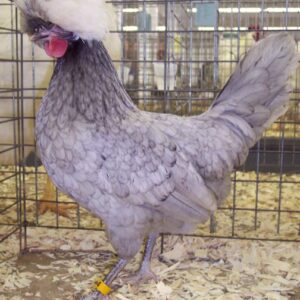
Blue Polish chickens have blue-toned body feathering and a white crest on top of the head. This variety is non-bearded, which means it does not have the full beard and muff feathering seen on bearded Polish varieties.
The crest is the feature everyone notices first. Males usually have a more erratic, umbrella-shaped crest, while hens often have a fuller, rounder crest. Some people call Polish chickens “top hats” or “top knobs” because of that head feathering.
Their large crest can reduce vision, especially if feathers hang over the eyes. That can make some birds more easily startled than non-crested breeds. If needed, carefully trimming feathers around the eyes can help them see better and move with more confidence.
Blue Polish vs Splash Polish and White Crested Black Polish
Blue Polish, Splash Polish, and White Crested Black Polish all belong to the crested Polish breed family, but they look different.
Choose Blue Polish if you want blue body feathering with a white crest. Choose Splash Polish if you prefer a lighter, splash-patterned bird with blue genetics in the background. Choose White Crested Black Polish if you want the classic black body with a white crest. Cackle notes that White Crested Black Polish is a long-established variety recognized in the American Standard of Perfection since 1874.
All three are ornamental, crested birds that work best for customers who enjoy unusual poultry. If your main goal is maximum egg production or meat, choose a production breed instead.
Blue, Black-Blue, and Splash: What to Expect When Breeding
Blue poultry color does not breed true. That means two blue birds will not produce all blue chicks.
When two Blue Polish chickens are bred together, the offspring may include blue, splash, and black-blue chicks. Breeding splash to black-blue can produce more chicks with a more uniform blue color.
This is normal blue poultry genetics, not a problem with the breed. If you want the best chance of uniform blue coloring, breeding choices matter. If you simply want beautiful crested birds, the color variety can be part of the fun.
Egg Production and Utility
Blue Polish chickens can lay a good number of white eggs for an ornamental breed. Eggs are usually small to medium in size.
They are not known for broodiness and usually do not make the best setting hens. That can be helpful if you want hens that keep laying rather than stopping to sit on eggs. However, they are still chosen mainly for their crest, color, and show appeal rather than egg output alone.
Cackle places Polish varieties in both rare breed and white egg layer categories, which fits their role as ornamental white egg layers. Cackle also notes that Polish chickens are good white-shell egg layers and come in bearded and non-bearded types.
Temperament and Suitability
Blue Polish chickens can make excellent pets and eye-catching backyard birds. They are often docile, curious, and fun to watch.
Their crest does require extra attention. In winter, head feathers can get wet when birds drink from open waterers. If the topknot gets waterlogged, it may freeze or make the bird uncomfortable. Trimming back the crest or using a water setup that keeps head feathers dry can help.
Because their crest can block vision, they may be more easily startled. A calm flock, safe housing, and gentle handling help them settle in. They do best where they are not picked on by more aggressive breeds.
Is the Blue Polish Chicken Right for Your Flock?
Choose Blue Polish chickens if you want:
A non-bearded crested chicken
A white-crested blue ornamental bird
A rare breed with strong show appeal
A chicken known as a “top hat” or “top knob”
Small to medium white eggs
A bird for backyard oddity and exhibition
A breed with fun blue/splash color genetics
A Polish Surplus or Crested Top Hat option to compare
Overall, this is a good choice if you want a beautiful, unusual chicken with personality. Blue Polish chickens are not the right bird for meat production or high-output egg goals, but they are a wonderful option for customers who enjoy ornamental poultry.
If you are still comparing breeds, the Chicken Breed Selector and Chicken Breeds List Comparison Chart can help you sort birds by purpose, size, temperament, and flock goals.
Breed History and Preservation
Polish chickens have a long history in Europe. The breed is often associated with Eastern Europe and Poland by name, but Cackle’s Gail Damerow article explains that Polish chickens were actually developed in the Netherlands. The name likely came from the route by which birds reached England.
The breed’s purpose changed over time. Polish chickens were originally kept for white eggs, but their dramatic crest made them popular as ornamental and exhibition birds. Today, most keepers choose them for beauty, variety, and backyard personality.
Cackle Hatchery® has been developing its Polish chicken color varieties since 1971, according to multiple Cackle Polish variety listings.
Recognition and Availability
Polish chickens belong to the Continental class. Some Polish varieties have long American Standard of Perfection histories, while other color varieties are kept mainly for ornamental and backyard interest.
You can choose Blue Polish chicks when they are available. You may also want to compare Crested “Top Hat” Special or Polish Surplus Special if you enjoy crested birds and do not need one exact variety. Cackle’s Polish Surplus can include White Crested Blue Polish along with other Polish color varieties, but it is straight run and does not guarantee specific colors.
Before you plan your order, check the Availability Chart for current hatch and shipping options. Cackle notes that the chart updates often and that your cart will show available shipping dates for the breeds you select.
Related Breeds and Helpful Cackle Hatchery® Resources
If you like Blue Polish chickens, you may also want to compare Splash Polish, White Crested Black Polish, Buff Laced Polish, Silver Laced Polish, and White Polish.
For more background, read Are Polish Chickens Really from Poland?. For broader browsing, use rare chicken breeds, white egg layers, baby chicks for sale, and the Chicken Breed Selector. Cackle notes that rare breeds are unique, heritage, and hard-to-find options for backyard flocks and collectors.
FAQ: Blue Polish Chicken
What is a Blue Polish chicken?
A Blue Polish chicken is a non-bearded crested Polish variety with blue body feathering and a white crest. It is mainly kept for ornamental, exhibition, and backyard interest.
Are Blue Polish chickens bearded?
This variety is non-bearded. That means it has the crest on top of the head but does not have the full beard and muff feathering seen on bearded Polish varieties.
Where did Polish chickens originate?
Polish chickens likely developed in the Netherlands, not Poland. Cackle’s Gail Damerow article explains that the breed name came from the route by which birds reached England.
Are Polish chickens really from Poland?
No, probably not. The breed is thought to have developed in the Netherlands, even though the name “Polish” stuck.
What do Blue Polish chickens look like?
They have blue-toned body feathers, a white crest, large nostrils, and a distinctive topknot. Hens often have fuller crests, while males may have more umbrella-shaped crests.
Do Blue Polish chickens breed true to color?
No. Like other blue poultry, Blue Polish chickens do not breed true. Breeding blue to blue can produce blue, splash, and black-blue chicks.
Are Blue Polish chickens good egg layers?
They can lay a good number of white eggs for an ornamental breed, but they are not high-production layers.
What color eggs do Blue Polish chickens lay?
They lay white eggs, usually small to medium in size.
Are Blue Polish chickens broody?
They are not known for going broody. Most customers choose them for appearance, show appeal, and white eggs rather than mothering ability.
Are Blue Polish chickens good pets?
Yes. They can make excellent pets and fun backyard birds, especially for people who enjoy unusual crested chickens.
Do Blue Polish chickens need crest trimming?
Sometimes. If the crest blocks vision or gets wet while drinking, careful trimming may help the bird see, drink, and stay more comfortable.
Are Blue Polish chickens good in winter?
They can do fine with proper housing, but the crest needs attention. Head feathers can get wet while drinking and may need trimming or a better water setup in cold weather.
Are Blue Polish chickens good for beginners?
Yes, if beginners understand crest care. They need clean water, balanced feed, secure housing, predator protection, and protection from flock bullying.
Can Blue Polish chickens come in Polish Surplus?
Yes. Cackle’s Polish Surplus can include White Crested Blue Polish, but the assortment is straight run and does not guarantee specific colors.
Can Blue Polish chickens come in Crested “Top Hat” Special?
Yes, they may be included, but Cackle’s Crested “Top Hat” Special is hatchery choice and does not identify or guarantee the exact breed or color sent.
Where can I check chick availability?
Check the Availability Chart for current hatch and shipping options.
Order from Cackle Hatchery
Choose Blue Polish Chicken from cackle hatchery. Review the product information above for current options, availability and ordering details.
Related Products
Related products